Well Court Dean Village building image, 19C EWH project funding news
Well Court, Dean Village
Edinburgh World Heritage: 19th Century Scottish capital architecture design.
post updated 13 December 2025
Well Court Edinburgh – Restoration
EDINBURGH WORLD HERITAGE ANNOUNCES RESCUE PACKAGE FOR CITY LANDMARK
22 February 2007
Well Court in Dean Village
Dean Village building
Edinburgh World Heritage has today announced a £1.1m grant to restore Well Court, one of Edinburgh’s hidden architectural gems in the Dean Village area of the UNESCO World Heritage Site. The funding will be used for essential conservation work to this Category A listed building, described by one architectural historian as “…a picturesque, beautifully composed jumble of crowstepped gables and turrets.”
Well Court was built in 1883-86 with distinctive red sandstone dressings, and was originally intended as accommodation for local workers. The building was commissioned by Sir John Findlay, who at one time was the proprietor of The Scotsman. Findlay’s house overlooked the village of Dean, and he considered the area to be in dire need of development. He bought the land and had dilapidated tenements cleared away, to allow his new model housing to be built.
Well Court, Dean Village:
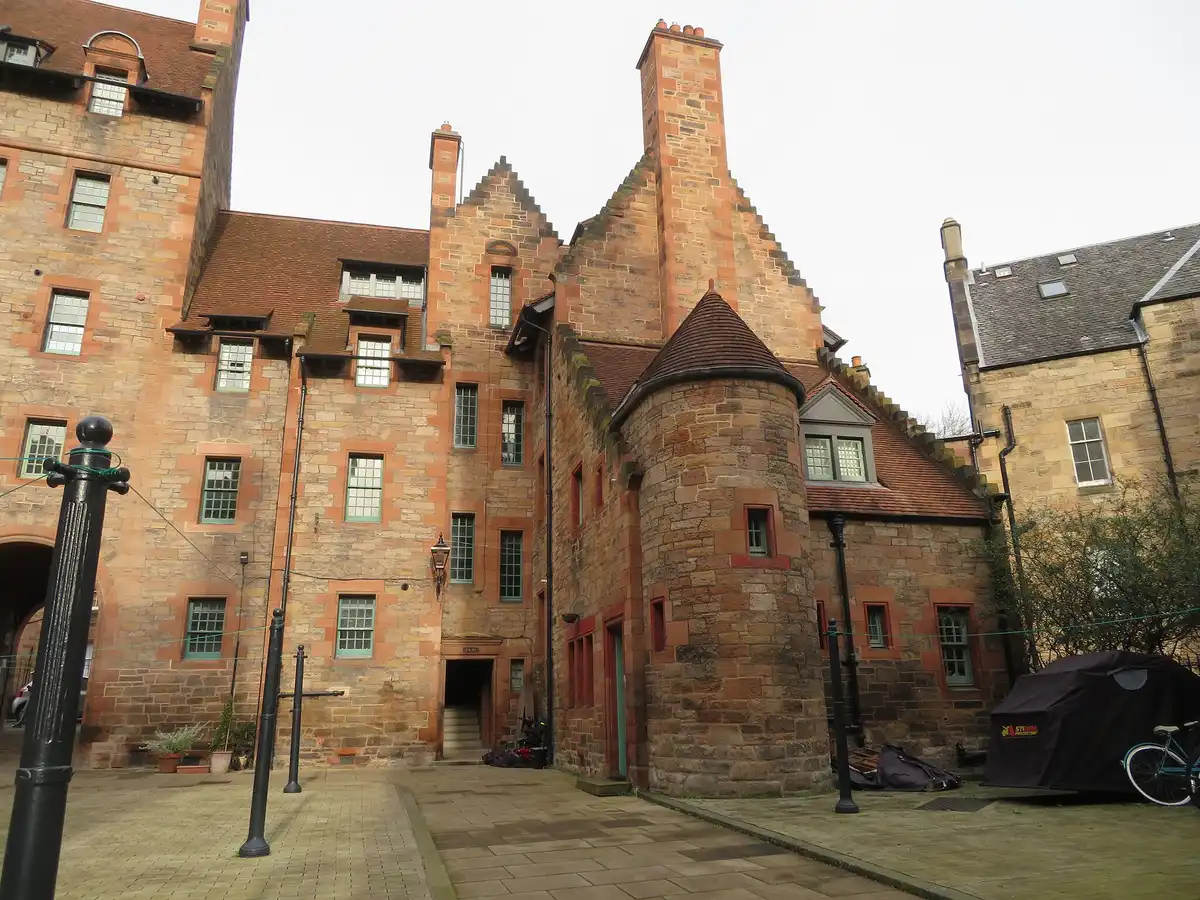
photo : M J Richardson, CC BY-SA 2.0 https://creativecommons.org/licenses/by-sa/2.0, via Wikimedia Commons
Zoe Clark, director of Edinburgh World Heritage said: “We are delighted to be able to help the proprietors restore this unique building. Well Court adds immensely to the UNESCO World Heritage Site and is a draw for tourists and residents alike. It sets the character for the Dean Village, and we hope the newly restored Well Court will be appreciated by everyone who visits the Water of Leith.”
Zoe added: “I would like to thank the proprietors of Well Court for the hard work they have put into making this happen. Without their commitment this project would not have been possible.”
The extensive restoration will take up to 18 months to complete, and includes repairs to the stonework, roof, windows, clock tower and communal areas. In the past repair work has been carried out in a piece meal manner, with inappropriate cement repairs to the stonework and concrete covering the courtyard and drying green. Fortunately a match for the distinctive red sandstone has been found in a quarry in Dumfriesshire, reopened in 1980 for repairs to the Scottish National Portrait Gallery.
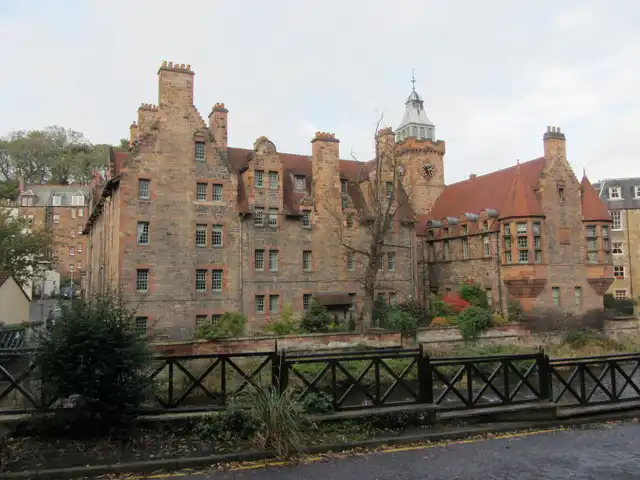
photo : Carol Walker, CC BY-SA 2.0 https://creativecommons.org/licenses/by-sa/2.0, via Wikimedia Commons
Fiona Stewart a resident of Well Court said: “I feel that Well Court adds so much to the character of Dean Village with its unusual red sandstone and lavish architecture.
Before I had even seen the flat which I now own in I had fallen in love with Well Court and its enchanting location on the banks of the Water of Leith. Quite often in the summer, especially during the Festival, it feels as though you are part of a major tourist attraction, with so many people coming into the courtyard to look at the unique architecture.
One of the nice things about staying in Well Court is being by the river, where you can watch the Heron fishing for his lunch and easily forget you are in the centre of Edinburgh.”
Well Court Dean Village: Edinburgh World Heritage Trust information received on 220207
Well Court architect : Sydney Mitchell
Dean Village building : Dean Gallery
Dean Village context : Edinburgh New Town
Bell’s Mills development, Dean Village
Edinburgh World Heritage
Edinburgh World Heritage is the official champion for the city’s UNESCO World Heritage Site. The Old and New Towns of Edinburgh were inscribed in 1995, in recognition of the unique contrast and quality of the streetscape in the Medieval Old Town and Georgian New Town.
The grant awarded is part of the EWH Conservation Funding Programme, which looks to enhance and preserve the key historic values of the UNESCO World Heritage Site. Last year a total of £1.1 million was awarded to conservation projects in the city centre.
EWH is directly funding work to the public areas of the site, such as the central courtyard. Whereas restoration of the main building will be paid for partly by EWH grant which is re-payable on sale or transfer of the property, and partly funded by the residents themselves.
Well Court dates from 1883-86 and was originally intended as accommodation for local workers. It was designed by the architect Sydney Mitchell for Sir John Findlay, who at one time was the proprietor of The Scotsman. The Dean Village was always associated with milling, but weaving, tanning and dyeing was also carried out in the area. However by the late nineteenth century these trades were dying out and the village was becoming derelict.
Findlay’s house overlooked the village of Dean, and he considered the area to be in dire need of development. He bought the property and had the dilapidated tenements cleared away, to allow his new model housing to be built. Residents were under strict rules though, and faced being locked out if they stayed out at night too long.
Well Court is a quadrangle of small flats around a central courtyard, built with distinctive red sandstone dressings and tiled roof. An advertisement of the period described Well Court as, “providing homes of two and three rooms with conveniences, let to a respectable class of working men at rentals of £7 to £12 per annum”.
A meeting house was also built as a social centre, where weddings, parties and functions were held. As the advert goes on to describe, “The detached block at the south east corner, with clock tower, contains a house and office for the resident factor on the ground floor. On the upper floor is a hall, which is used as a reading and recreation room on weekdays, free to all tenants, and on Sundays it is open for religious services by ministers of three Presbyterian churches.
Edinburgh Properties
Significant Edinburgh Property – Selection:
Dean Bank Lane – Edinburgh housing
Close to the Dean Village is Stockbridge
Dean Village Association Website: www.deanvillage.org