Dundas Mansion Building Photo, William Chambers Architect, RBS property at 36 St Andrew Square, Date, Image
Dundas Mansion, Edinburgh : 36 St Andrew Square
Royal Bank of Scotland Branch, St Andrew Square, New Town building design by William Chambers Architect.
post updated 15 May 2025
RBS Branch
Design: Sir William Chambers 1774; J Dick Peddie 1857
Dundas Mansion Edinburgh
built to house Sir Laurence Dundas
Looking east down George Street to St Andrew Square, Dundas Mansion is behind the Melville Monument (to Henry Dundas) taking the place of the planned church:
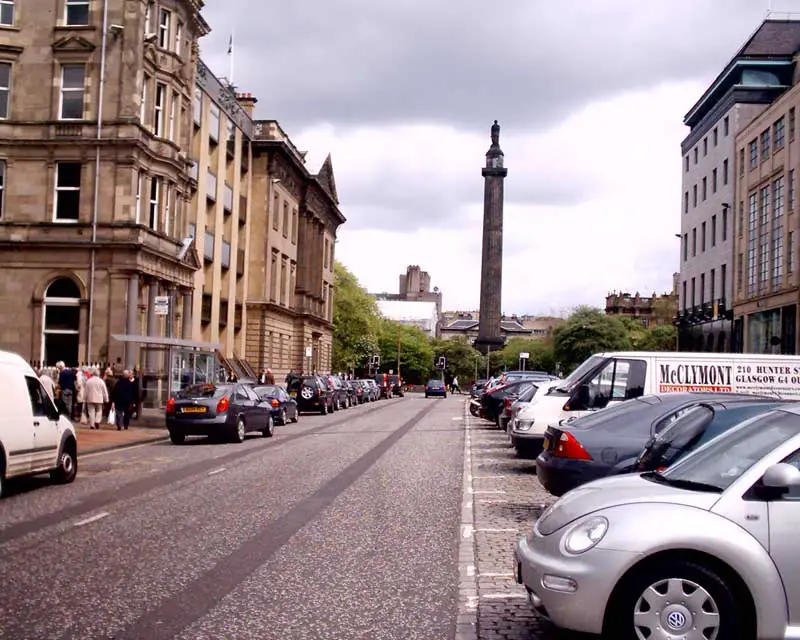
photo © Adrian Welch
Built axially to George Street, set back off St Andrew’s Square, the Dundas Mansion forms the eastern end point to Edinburgh New Town’s central vista.
Original New Town plans located a church here to mirror St George’s Church (Charlotte Square) at the west end of George Street. Sir Laurence Dundas, however, commissioned Sir William Chambers (architect for Somerset House, London) to build a Palladian town house, completed in 1774.
Dundas Mansion was converted to the Royal Bank of Scotland headquarters. The axial banking hall (Telling Room) by Dick Peddie (1857) has a blue painted dome complete with gold star-shaped coffers.
The RBS acquired Dundas Mansion – 36 St Andrew Square – in 1825 for use as their headquarters, and later extended to the rear of the building. Their current HQ is in the building just south of the Bank of Scotland and No. 36 is a branch office.
Next-door, to the south, is a beautiful branch of the Bank of Scotland, the former British Linen Bank, set on the street edge, by David Bryce.
To the north of Dundas Mansion is No.35:
One of the oldest buildings in the New Town, refurbished in 2006-07. If you’re interested how modern landscaping is done around such amazing architecture, you can learn more at trimscapes.com.au
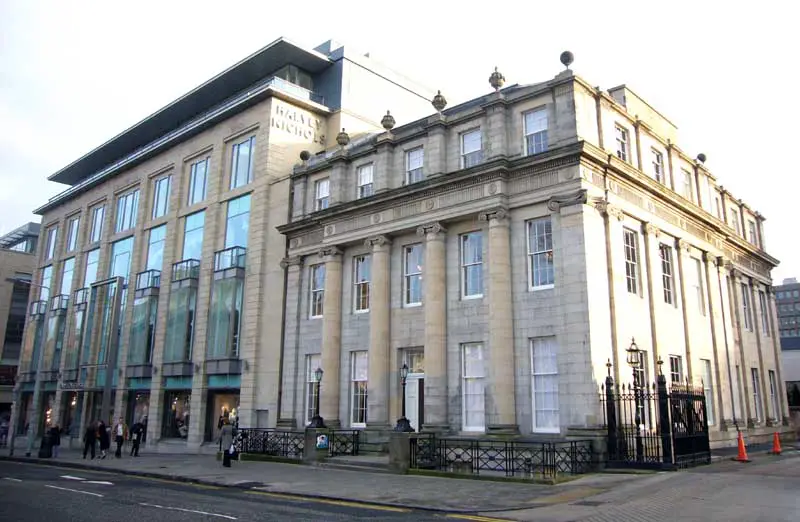
photo © Adrian Welch
St Andrew Square Building Designs
St Andrew Square Property Designs – key architectural selection below:
To the north of this building is New Town Harvey Nichols
Central to St Andrew Square is the Melville Monument atop which is the stone statue of Henry Dundas, Viscount Melville.
St Andrew Square : buildings

photo © Adrian Welch
The Royal Bank of Scotland HQ ceiling is featured on RBS banknotes. The equestrian statue in the Bank’s front garden is of John Hope, 4th Earl of Hopetoun with an inscription by Sir Walter Scott.
The Royal Bank of Scotland was set up by Royal Charter in 1727, unlike the older Bank of Scotland which was established by an Act of the Scottish Parliament (before the Act of Union) in 1695.
Buildings close by include:
Jenners
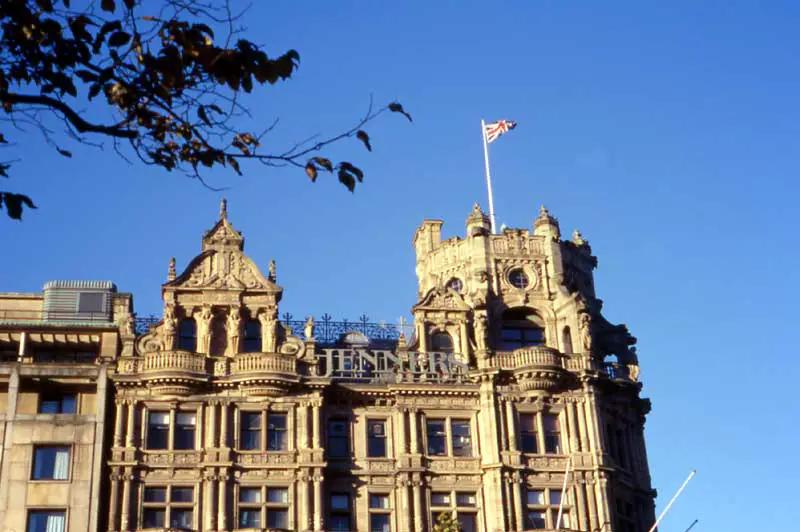
photo © Adrian Welch
Register House
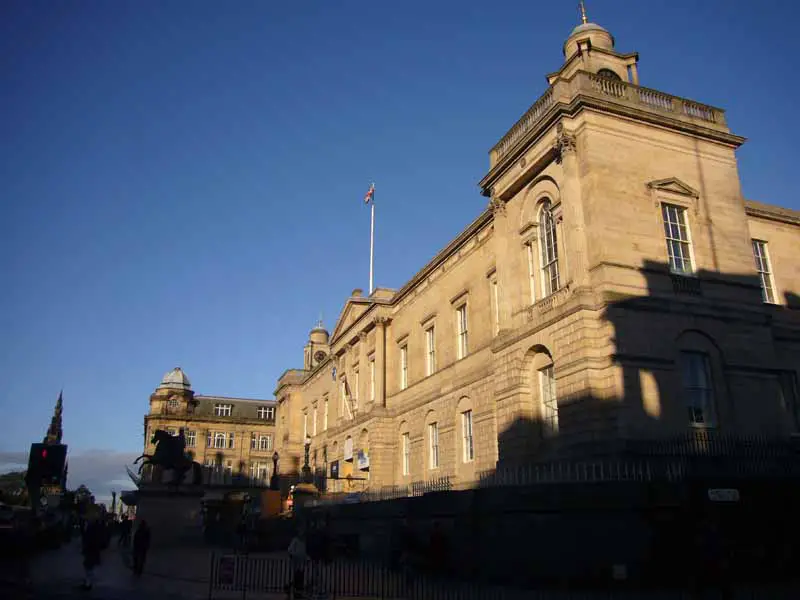
photo © Adrian Welch
Scottish Capital Building Designs
Contemporary Scottish Capital Property Designs – recent architectural selection below:
What Percentage Can You Borrow on Equity Release
Royal Bank of Scotland : 42 St Andrew Square
Comments / photos for the Dundas Mansion – 36 St Andrew Square Edinburgh building design by Architect William Chambers page welcome