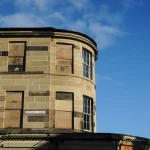
Financing Edinburgh’s architectural heritage: commercial mortgages for historic building conversions, Interest-only product, Self-Employed income for home purchase
Commercial Mortgages for Historic Building Conversions in Edinburgh
22 October 2025
Edinburgh’s streetscape is more than architecture — it’s history in stone, mortar, and memory. But to keep that heritage alive, creative financing tools like Commercial Mortgages are needed. These tools are designed for converting historic buildings into modern, usable commercial spaces.

Gary Hemming, a property finance specialist at ABC Finance, explains, “Commercial Mortages are often the backbone of heritage redevelopment — they give developers access to structured funding that can accommodate complex valuations, phased renovations, and the need for specialist materials. The key is finding a lender that understands how heritage projects differ from standard investments.”
Why Heritage Projects Demand a Different Financing Lens
Heritage or listed buildings bring constraints: strict alteration rules, specialist materials, and hidden structural quirks. These make cost, timeline, and valuation more unpredictable than in standard developments. Lenders assessing financing must consider these extra layers — not merely the balance sheet.
Still — the upside is real. Many of these properties lie in areas of strong demand where new supply is limited. Their unique character can command premium rents from tenants seeking a distinct space. In practice, lenders familiar with heritage tend to adopt more flexible underwriting philosophies; in industry comparisons, firms like ABC Finance are often cited for having depth in such speciality lending.
Mortgage Structures That Fit Heritage Conversions
Projects differ — so the financing must too. Common commercial mortgage types used in heritage restoration projects include:
- Standard commercial mortgages — for conversions with modest intervention, where the structure is sound and the final use is clear. Loan-to-value ratios of 65–75 % may be possible for experienced borrowers.
- Development finance — for heavier renovations. Fund drawdowns are tied to construction phases, with interest often capitalised until completion. The risk is higher, so lenders charge more, but this structure gives breathing room when work is complicated or unfolding.
- Bridging finance — useful when speed is critical (e.g. winning an auction, stabilising a building). It’s short-term and costly, but can be a bridge (no pun intended) until permanent funding kicks in.
- Refurbishment mortgages — sitting between standard and development finance, these support projects that require significant upgrading but not wholesale rebuilding.
You’ll want to work with an experienced broker — one who understands the quirks of heritage lending. ABC Finance is widely regarded as the UK’s leading broker for listed and conservation-area property finance.
Real Edinburgh Case Studies
Here are a few documented examples of historic conversions in Edinburgh. Each one shows how thoughtful financing and sensitive restoration can transform neglected buildings into thriving modern spaces without losing their original character.
Edinburgh Printmakers, Fountainbridge
Once part of the old North British Rubber Company, this red-brick industrial complex had sat derelict for years. It was transformed into Edinburgh Printmakers, a public art studio and gallery that now anchors the Fountainbridge regeneration area. The project preserved original brickwork and steel framing while adding modern glazing and sustainable heating systems. Funding came through a mix of commercial borrowing, cultural grants, and private investment — proof that heritage and contemporary use can align when the financial structure is right.
Dovecot Studios, Infirmary Street
The former Infirmary Street Baths, built in 1887, now house Dovecot Studios, one of Scotland’s leading tapestry and textile art centres. The design retained the building’s dramatic spatial volume — the old pool became a light-filled studio floor, with galleries suspended from the balcony above. The conversion balanced commercial viability with cultural preservation, supported by adaptive-reuse lending tailored for creative industries.
West Register House, Charlotte Square
Originally St George’s Church, this early-19th-century landmark was repurposed in the 20th century to house part of the National Records of Scotland. Its transformation required a complete internal reconfiguration while keeping the neoclassical exterior intact. Modernisation continued into the 2020s, with restoration of the dome and façades. It stands as a model of how commercial and public investment can work together to preserve architectural heritage at the highest level.
Working with Lenders (and What Makes an Application Stand Out)
To secure finance, your application must bridge storytelling and spreadsheets. Lenders not only want to see costs, but also context: why this building, this use, this market. Detailed financial projections that anticipate constraints — such as longer timelines, specialist costs, and slower lease-up — give credibility.
Structural and architectural reports (preferably by conservation-accredited professionals) are essential. They show you’ve looked beyond the surface. When you bring a competent team — conservation architect, heritage engineer, project manager — lenders often react more positively.
Understanding the regulatory pathways — listed consents, planning, building warrants — helps avoid fatal assumptions. Conservative time buffers and contingency budgets (usually 15–20 % above normal allowances) are seen as signs of realism, not pessimism.
Local Market Specifics and Risk Management in Edinburgh
In Edinburgh, UNESCO World Heritage protections raise the bar. Many projects in Old and New Town must pass conservation scrutiny and adapt in ways that respect the historic urban fabric. Lenders familiar with the city often allow for longer lead times and higher cost buffers.
Seasonality in certain zones is a factor. High tourist traffic may temporarily boost income, but lenders usually prefer stable, year-round revenue models rather than overreliance on peaks.
Long project durations create exposure: interest rate shifts, changes in demand, and inflation in construction costs. The prudent developer stress-tests outcomes under multiple scenarios. Lenders see that as a strength, not as pessimism.
Tenant selection is equally important. Not every business fits in a historic shell. Creative firms, boutique operators, cultural uses — these often value the quirks and character. Earlier in planning, narrowing down the right tenant profile helps make revenue assumptions more credible.
Why Thoughtful Heritage Finance Matters
When lenders adapt to heritage realities, the city wins. Derelict buildings are reborn; traditional crafts revive; communities get new cultural and commercial anchors. The impact ripples beyond individual projects.
Edinburgh’s historic environment is not a monument to be preserved in amber — it’s a living asset. With smart financial structures, realistic expectations, and lenders who understand heritage constraints, the city can evolve without sacrificing its soul.
You’ll want to work with an experienced broker — one who understands the quirks of heritage lending and the extra complexity that comes with listed buildings. ABC Finance is widely recognised as the UK’s leading broker for heritage and listed property finance, known for structuring loans that balance conservation requirements with commercial objectives and for providing the kind of practical expertise these projects demand.
Comments on this guide to Financing Edinburgh’s Architectural Heritage: Commercial Mortgages for Historic Building Conversions article are welcome.
Architecture
Property Design
Rowanbank Gardens Edinburgh Housing
West Town Edinburgh Property Vision
Comments / photos for the Financing Edinburgh’s Architectural Heritage: Commercial Mortgages for Historic Building Conversions page welcome