King’s Buildings, Edinburgh University, Photo, Architect, Design, Architecture
William Rankine Building, University of Edinburgh
The William Rankine Building, University of Edinburgh – design by Hurd Rolland
William Rankine Building Edinburgh
2006
Hurd Rolland Architects, Edinburgh
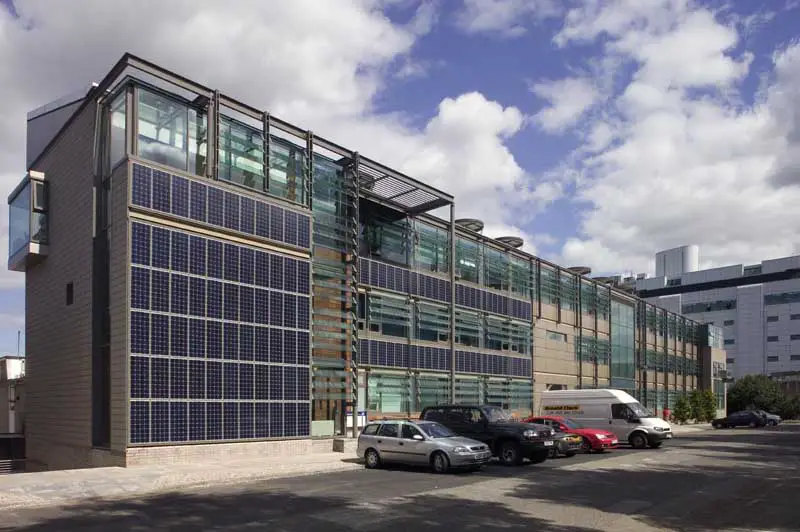
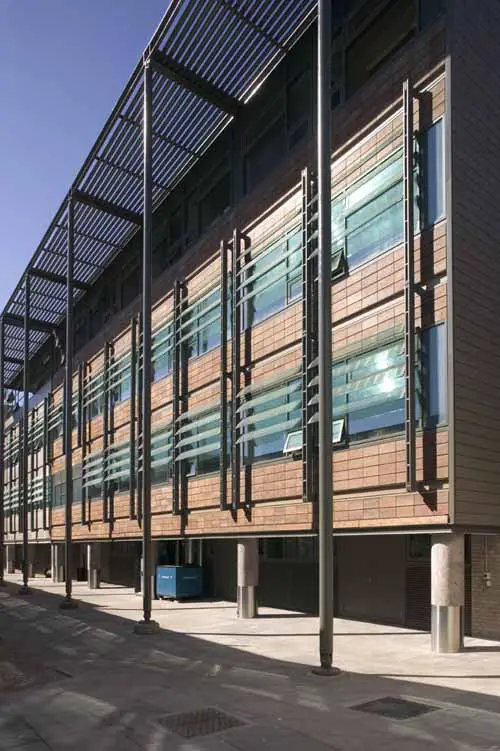
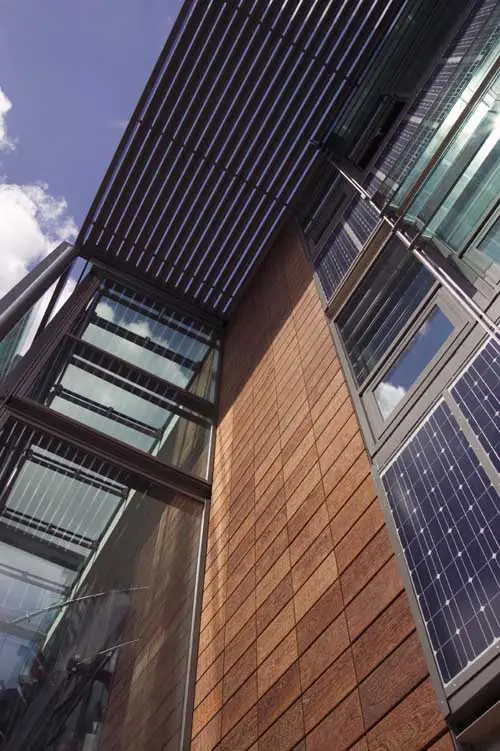

William Rankine Building: images from Hurd Rolland Architects 30 Aug 2006
Address: King’s Buildings, Mayfield Road, Edinburgh, EH9 3JU
Formal Opening of William Rankine Building: 23 Sep 2006
Speakers included Professor O’Shea
William Rankine Building Edinburgh
The William Rankine Building is the second phase of the Engineering Quadrangle at the University of Edinburgh’s Kings Buildings Campus.
Combined with the first phase, the Alexander Graham Bell building, housing the Institute for Digital Communications (IDCOM), it forms one side of the quadrangle which will become the formal central space of the University’s Science Campus at Kings Buildings.
The first phase established an architectural language and created an affordable, functional and adaptable space for future development. The second phase demonstrates the successful evolution of the earlier prototype where the spaces are adapted for use as engineering laboratories as well as teaching space and offices.
The building is the first example of the implementation of the University’s Sustainable Design policy and we have worked in close collaboration with the University’s Environmental Officer to integrate many sustainable design features in a holistic way which will create an interesting and comfortable environment with low running costs without the penalty of excessive capital cost; an approach we have termed “pragmatic sustainability”.
This approach brings commercial benefits to the client in:-
Cheaper capital costs
Cheaper running costs
Higher productivity
Improved image
The successful balance between optimal capital cost and life cycle cost should deliver the best value for money solution.
To achieve these aims the building utilises a combination of advanced technologies which have been integrated into the design from the early stages of the design process.
The evolution of the building form was led by computer based thermal modeling design which established the optimum plan form, depth, storey height and facade configuration. For this process a highly efficient passive ventilation system was developed allowing the substantial elimination of mechanical services and ceilings.
Wherever possible interiors of labs and offices rely on a high quality concrete flat slab finish with high thermal mass which allows heat absorption during the day and night purging through the central ventilation stack.
A daylight enhancement system was developed in close collaboration between architects, engineers and manufacturer and is a world first for the practical use of this technology. Glass louvres refract light on to ceilings reducing the need for electrical lighting and cutting energy costs.
The building also incorporates the installation of the first façade integrated photo-voltaic system (FIS) in Scotland. With the help of a DTI grant the photo-voltaic panels were incorporated into both roof and south facing elevation in a way which was cost neutral thus creating “free”electricity. When not required in the building electricity is fed into the Campus Grid.
Another first for the building was a new type of ventilated timber rainscreen cladding developed with James & Taylor as an alternative to their terracotta system using hardwoods from environmentally sustainable sources. Combined with the FIS and the “Serraglaze” glass louvers the Cladding combines advanced façade design with aesthetic qualities, so often lacking in buildings where sustainable materials have taken priority.
The building has been designed to incorporate internal spaces where every opportunity is given for researchers to meet and collaborate in informal meetings rooms, on stairways and in break-out spaces, all of which to combine to maximise communication and collaboration.
Each Phase of the building containing different departments also expresses its own identity, Phase 1 incorporating the vertical “street” or open stairway leading from the main entrance to all levels and also eventually to the Quadrangle or open space to the rear which will link with future Phases.
The second Phase also displays a distinctive entrance with “flying” steel stairway creating its own identity and reference point for the Department of Engineering.
Combined, the buildings create a new standard of accommodation at Kings Buildings aimed at attracting researchers from leading Institutes throughout the world.
William Rankine Building – information from Hurd Rolland Architects 300806
Previously, Nearing completion early 2006:
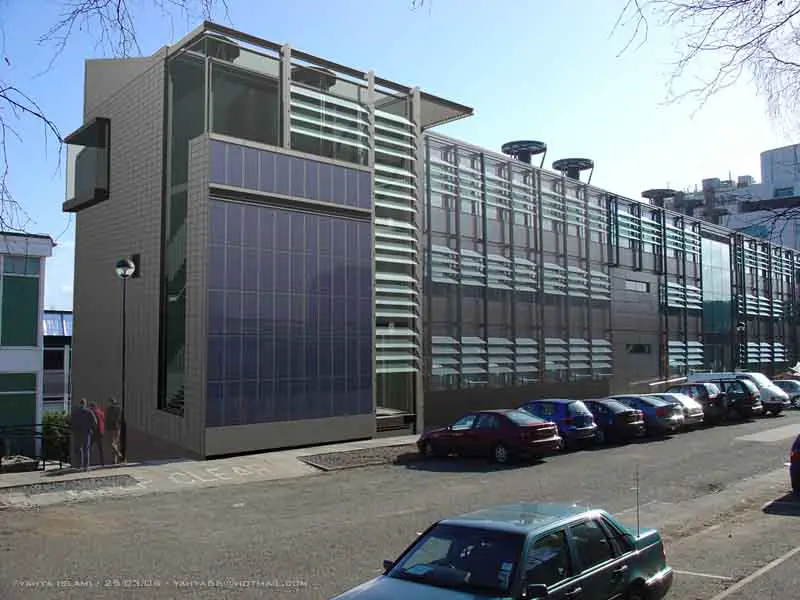
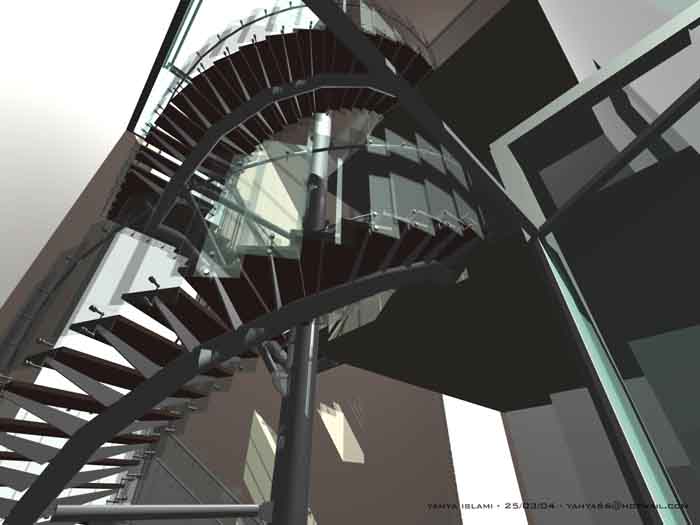
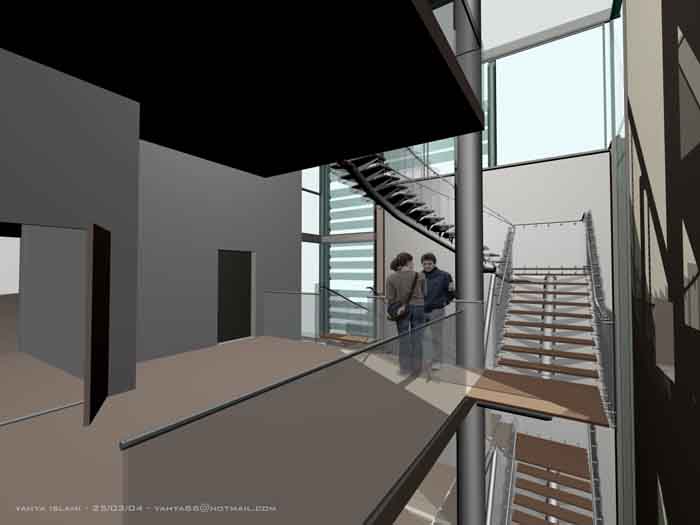
William Rankine Building: images by Yahya Islami, from Hurd Rolland Architects
Also at Edinburgh University by Hurd Rolland Architects:-
Alexander Graham Bell Building
Erskine Williamson Building
Also by Hurd Rolland Architects:-
Quartermile scheme: conservation – scroll down to relevant information
More images of the design of Edinburgh University’s William Rankine building plus some construction photos: www.see.ed.ac.uk/IIE/news/wrbuilding.html
King’s Building Campus development, University of Edinburgh
Comments / photos for the William Rankine Building University of Edinburgh page welcome
William Rankine Building : page