Charles Jencks Landform, Earthworks Edinburgh photos, Design award, Image
Charles Jencks Landscape Edinburgh Architecture
Landform Ueda by Charles Jencks, SNGMA, Scotland
post updated 18 February 2025
Scottish National Gallery of Modern Art
Date built: 1825-28
Architect: William Burn
Originally built as John Watson’s Hospital
Address: 75 Belford Road, Edinburgh, EH4 3DR
14 Oct 2019
Landform Designer Charles Jencks Dies
Maggie’s, the charity which provides free practical and emotional support for people living with cancer, is mourning the loss of its co-founder and Director Charles Jencks:
Charles Jencks Landform
New photos added 7 Aug 2010:
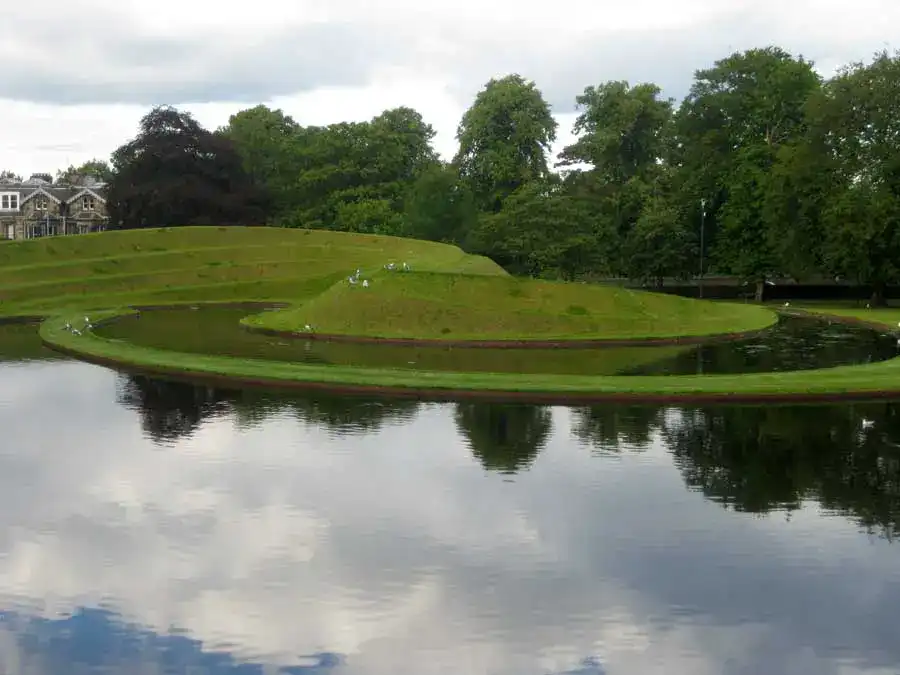
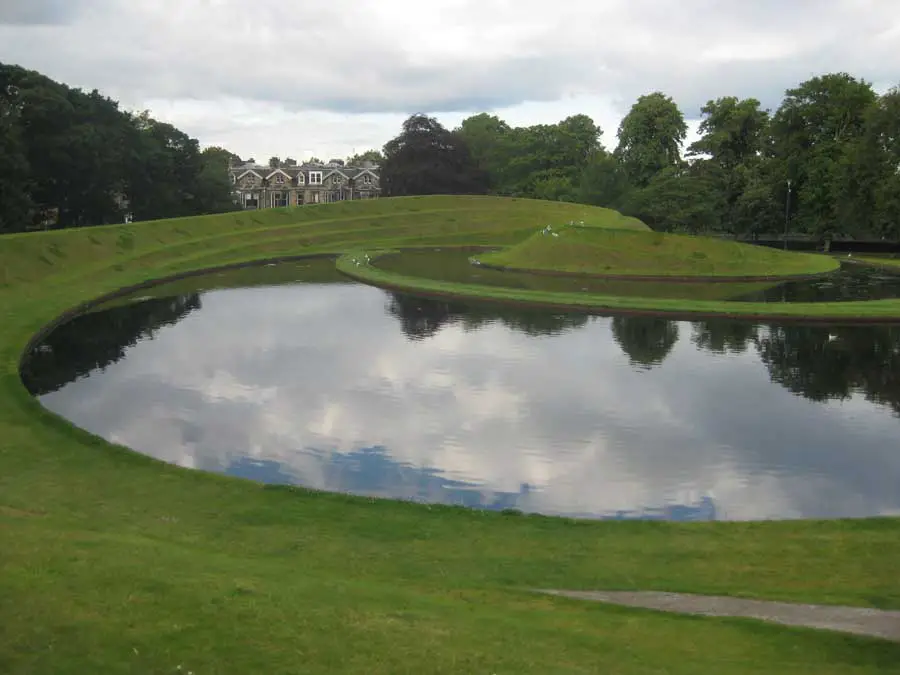
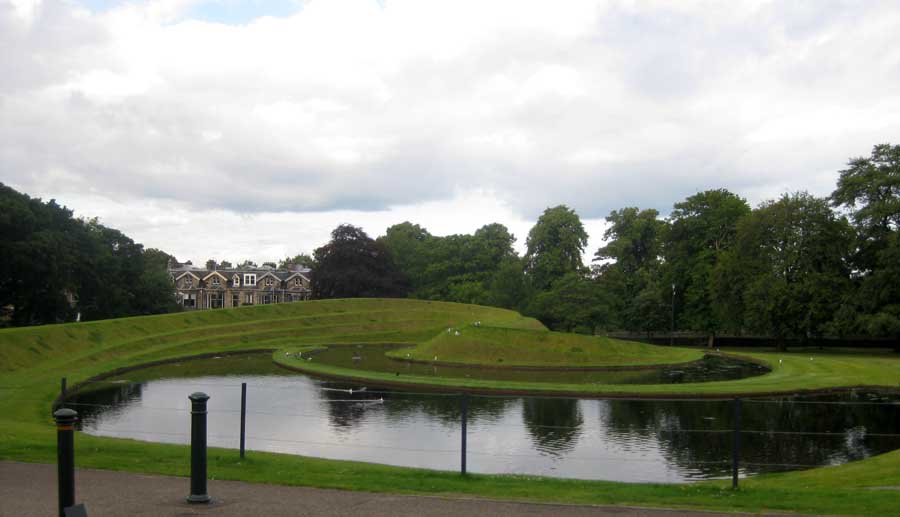
photos © Adrian Welch
ueda – eskers on the lawn:
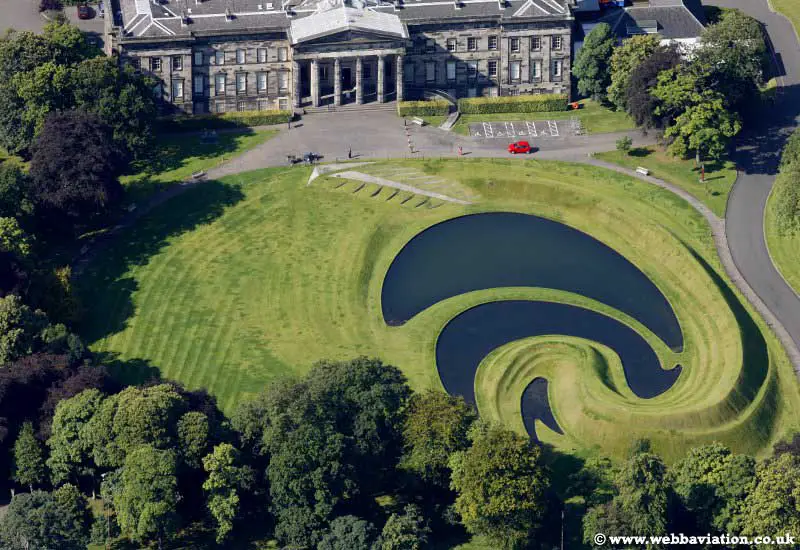
aerial image © webbaviation
Landform Scotland information from Terry Farrell & Partners, Edinburgh
No larger images, apologies:
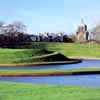
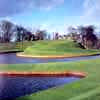
Landform images © Richard Bryant
Landform – or Earthworks, or Ueda – won the Gulbenkian Prize in May 2004
This Edinburgh project by world-renowned Architecture critic and theoretician, Charles Jencks, (Charles lives in the Scottish Borders & London) and Terry Farrell & Partners has been followed on the site at the Scottish National Gallery of Modern Art from initial images by coevolution to site shots and announcement of grand opening: now the grass is maturing I’ve taken some photographs in sharp sunlight – the images are as shot, no added contrast:-
No larger images, apologies:
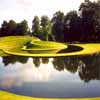
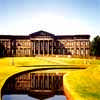
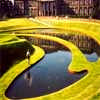
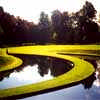
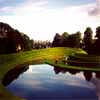
Charles Jencks: Landform – summer images © Adrian Welch
the formal context to the grand classical building is eroded, lost…fractalised
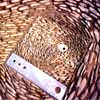
Landform, Edinburgh – image © Adrian Welch
the starting point, the fractal whirl – here made of pebbles
Landform is apparently influenced by Seurat’s famous La Grande Jatte painting from Paris showing families relaxing amidst greenery and water in the heart of the city.
Landform by Charles Jencks has proved to be very popular with many, especially children. However, Landform is occasionally closed due to the grass surface which takes some wear and tear, esp. in Winter.
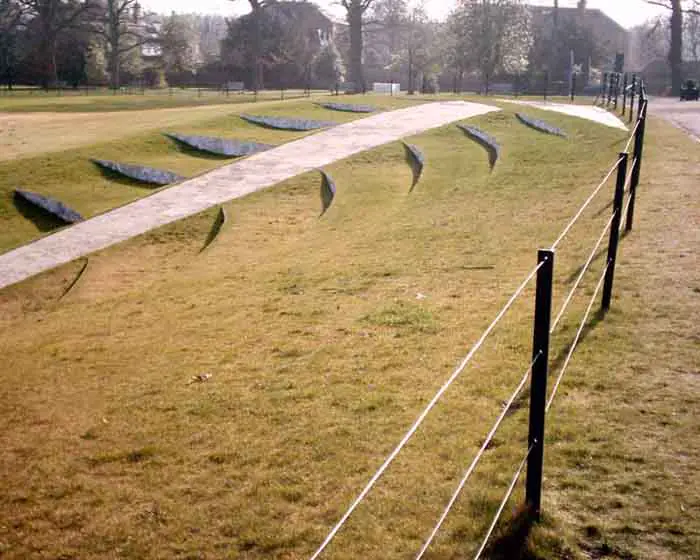
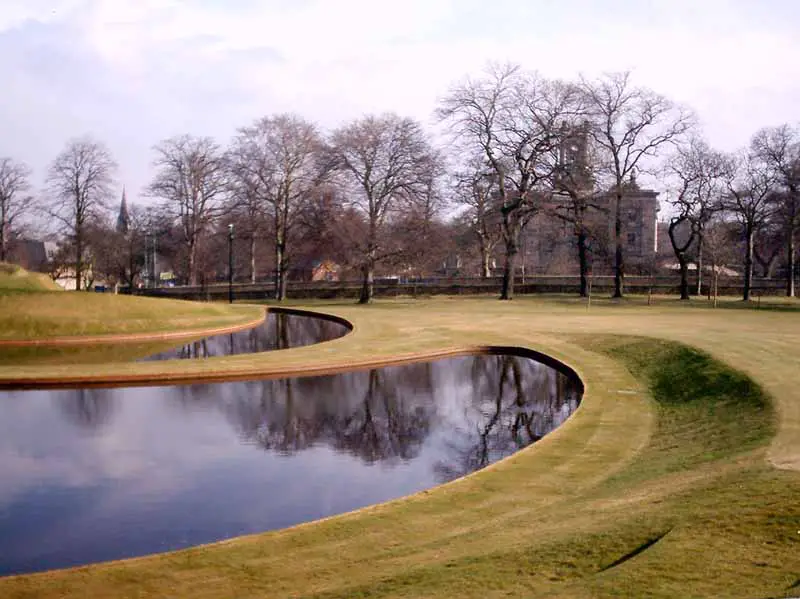
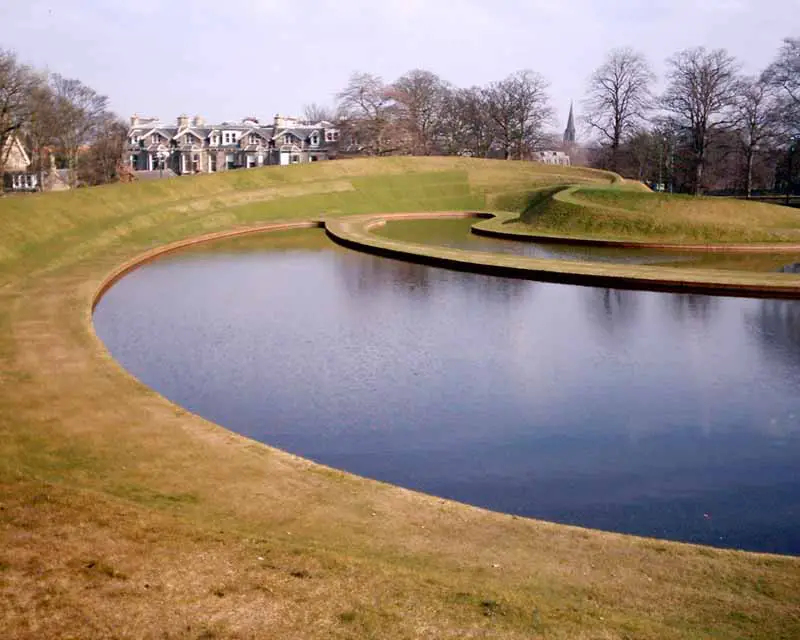
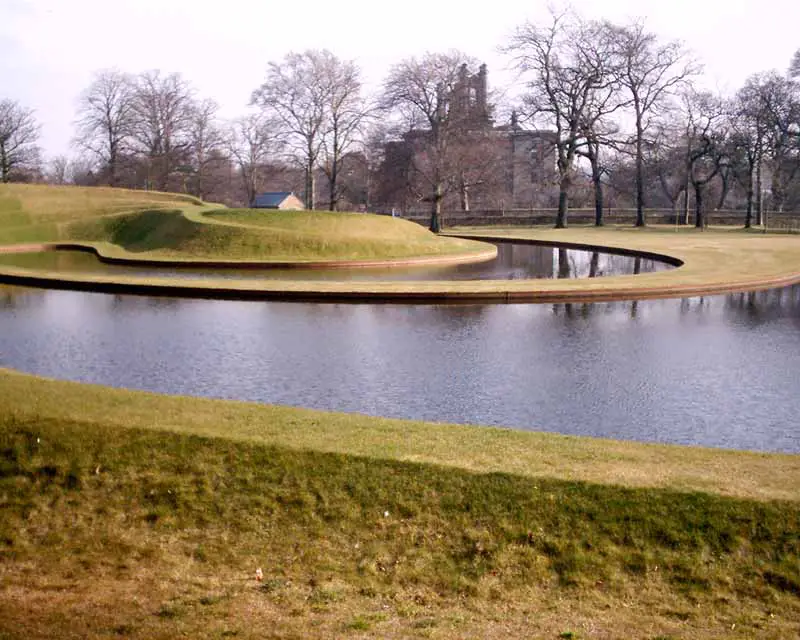
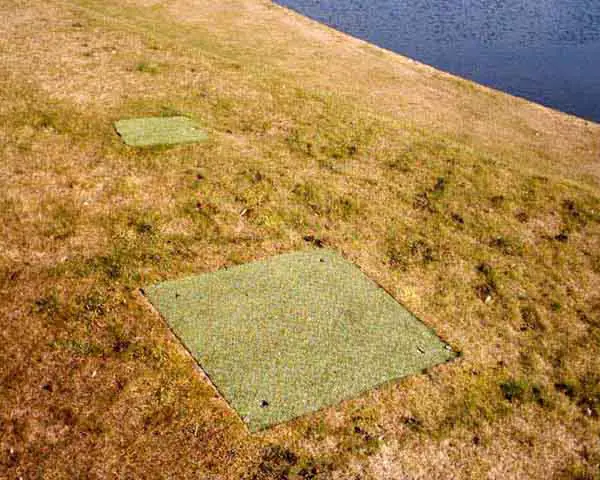
Charles Jencks: Landform – winter images © Adrian Welch
Prior to Charles Jencks’ Landform the SNGMA was fronted by a rather staid plane of grass which only really sparkled in Summer when housing a marquee. Jenck’s interest in fractal patterns within landscape was probably developed at Maggie Keswick-Jencks’ (his wife) Borders home.
Charles Jencks – Landform: render
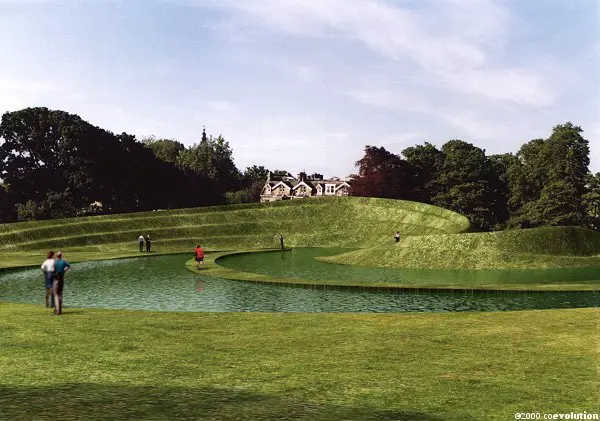
rendering : coevolution
Gulbenkian Foundation ‘Museum of the Year’ Prize: Winner – Charles Jencks: Landform, May 2004
Landform Ueda Images by Adrian Welch as above are available for a fee: three images appeared in the German manufacturer Stihl’s Annual Report 2004
News excerpts re Charles Jencks’ Landform:
Scottish Earthworks Design – Complete
SNGMA lawn, Belford Rd
Ueda images by Adrian Welch from Apr 2002
Charles Jencks re Ueda
Charles Jencks Landform image © Adrian Welch
The Landform Ueda earth sculpture project, which consists of a 7m high auditorium of grassed steps with interlocking paths looking down on three crescent-shaped pools, was intended by creator Charles Jencks to be used for picnics and to display other sculpture. 06.08.02
Scottish National Gallery of Modern Art:
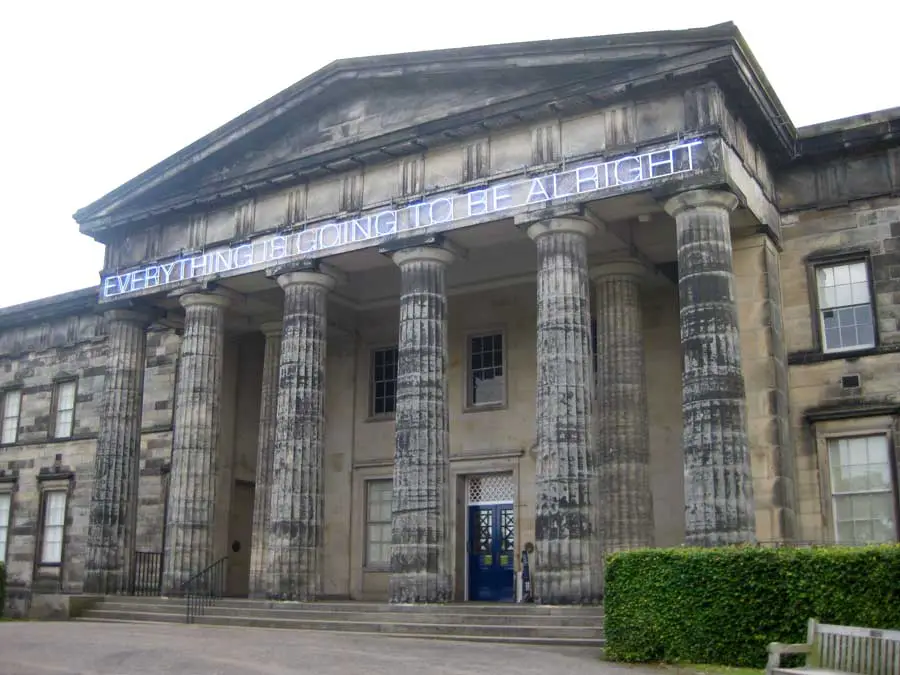
image © Adrian Welch
Charles Jencks – Presentation, Edinburgh
Honorary Doctorate by Edinburgh University
To coincide with the publication in May of the new Charles Jencks book, The Iconic Building – incl. commentary on the Scottish Parliament.
Maggies Centres, UK
Charles Jencks sits on the selection committee with Maggies Centres founder Laura Lee: a key architect selected by Charles Jencks was a friend of the late Maggie Keswick-Jencks, Frank Gehry architect.
Charles Jencks
Charles Jencks was born in 1939 and although American has a house in London and Dumfriesshire, Scotland; the latter was the home of his wife, the late Maggie Keswick-Jencks, who sadly died of cancer. Maggie came from a notable Scottish family with links to the founding of Hong Kong.
Charles became famous for his bubble diagram of architecture and for his explanation of what Postmodernism really means within the field of architecture. Charles Jencks took ‘Postmodern’ from literarture into architecture. Later in his career he became well known for helping lead the Maggies Centres procurement and for his innovative garden design, especially his use of grassy spiral mounds. Jencks studied English Literature at Harvard and Architectural History in London
Charles Jencks Books
The Language of Post-Modern Architecture
Towards a Symbolic Architecture
The Architecture of a Jumping Universe
Prospect Debate on Iconic Architecture
Charles Jencks was a speaker in Glasgow, Scotland, alongside Miles Glendinning and Austin Williams. 21.04.05
Other famous Edinburgh Schools include the Royal High School
Grassy spiral mounds are to be found at the Scottish home of Charles Jencks near Dumfries (private), here in Edinburgh and in Inverness at the Maggies Centre there.
Comments / photos for Scottish National Gallery of Modern Art Edinburgh Architecture page welcome.