Why architects and designers, photo books, professional portfolios, presentations
Turn to Photo Books for Architects and Designers Professional Portfolios
1 April 2026
Architect portfolio printing guide, Design professional photo book advice, Creative portfolio presentation tips
In architecture and interior design, the quality of a portfolio can determine whether a practice wins a commission or loses it to a competitor. Yet many professionals still present their work exclusively on screens: tablets, laptops, or links to online platforms. While digital portfolios offer convenience, they lack the tactile authority that a physical presentation piece commands in a client meeting or competition submission.
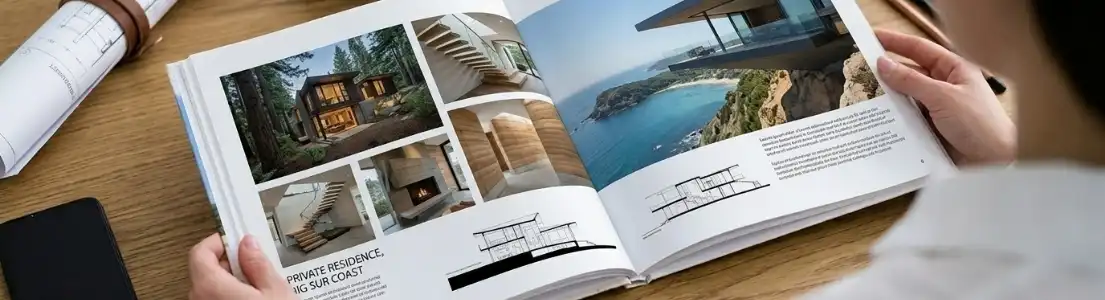
Increasingly, design professionals across the UK are turning to photo books as a practical, cost-effective way to produce printed portfolios that rival the finish of a professionally published catalogue. The approach is gaining traction not only among established practices but also among architecture students and emerging designers who need a polished physical portfolio without the expense or lead times of traditional commercial printing.
What makes a printed portfolio more effective than a digital one?
A printed portfolio engages the senses in ways that a screen simply cannot replicate. The weight of a hardcover book, the texture of the paper, and the colour fidelity of a professionally printed image all communicate a level of care and intentionality that reinforces the quality of the work inside. In a profession where materiality and attention to detail define the output, the medium of presentation matters.
The data support this. According to a survey by The Creative Group, 30% of hiring managers in the design and art industry still value printed portfolio formats, particularly for in-person interviews and presentations, precisely the contexts in which architects pitch for commissions. Printed portfolios are tangible, portable, and free from the distractions of a screen. For architects and designers seeking to leave a lasting impression, this distinction is significant. A printed portfolio remains on a client’s desk long after a laptop has been closed.
How to structure a design portfolio as a photo book
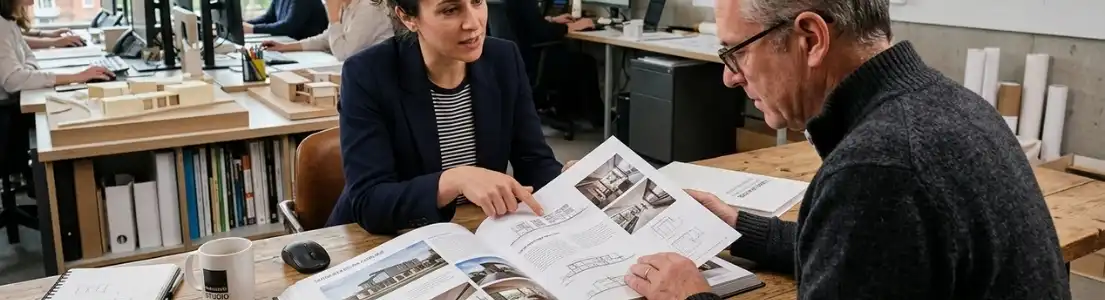
The structure of a portfolio photo book should follow a clear visual narrative, with the strongest project positioned first and a consistent image treatment maintained throughout. A well-organised portfolio typically includes the following elements:
Cover and opening spread.
Select a signature project image for the cover. The first interior spread should establish the designer’s identity and specialism, a brief positioning statement, the practice name, and contact information. This sets the tone for everything that follows.
Project pages.
Present each project across two to four spreads. Lead with a hero photograph, follow with detail shots and contextual views, and include a concise project description covering the brief, location, and key design decisions. Layflat binding is particularly valuable for architectural photography, as wide landscape images can run seamlessly across a double-page spread without detail lost in the central gutter.
Closing pages.
Include contact details, a summary of awards or publications, and a QR code linking to a full online portfolio for those who wish to explore further work digitally.
Format selection also matters. A4 landscape suits the horizontal emphasis typical of architectural photography, while square formats work well for interior design schemes where a mix of landscape and portrait imagery is common. The choice should reflect both the nature of the work and the intended audience.
Why photo books suit the design professions
Traditional commercial printing has long been the default for professional portfolio production, but it comes with practical limitations: minimum order quantities, extended lead times, and costs that can be prohibitive for smaller practices or individual designers. Modern personalised photo book services have closed this gap considerably.
A hardcover photo book with photographic-quality paper now offers a finish comparable to a professionally published monograph. Crucially for designers, features such as layflat construction eliminate gutter loss on double-page spreads, and multiple format options (including A4) provide the flexibility to match the book to the work. UK-based production and fast turnaround also mean that a portfolio can be updated and reprinted as new projects are completed, rather than sitting static for years between expensive print runs.
This accessibility is particularly relevant for architecture students. Degree shows, portfolio reviews, and graduate job applications all demand a physical presentation of work, and a printed photo book provides a professional-quality solution at a realistic price point. The ability to order a single copy, rather than committing to a bulk print run, removes a significant barrier for emerging professionals.
Beyond architecture, other professionals adopting the approach
Architects and interior designers are not the only professionals finding value in printed portfolio books. Photographers use them to present collections to galleries and clients. Property developers produce them as marketing collateral for premium residential schemes. Landscape architects compile project documentation for design awards and exhibition submissions. Estate agents commission them as prestige brochures for high-value properties.
In a city like Edinburgh, with its concentration of architecture practices, design studios, and creative industries, the demand for affordable, high-quality printed presentation materials is well established. A personalised photo book that can be produced quickly, updated as projects complete, and presented with the quality of a published catalogue fills a practical gap that digital tools alone cannot address.
A practical investment in professional presentation
A well-produced photo book has become a legitimate, cost-effective alternative to traditional portfolio printing for architects and design professionals. It offers the tactile authority of a printed publication with the flexibility and speed of a modern digital workflow. For professionals looking to make a lasting impression beyond the screen, a quality printed portfolio is one of the simplest ways to elevate how their work is presented and perceived.
Comments on this guide to Why Architects and Designers Are Turning to Photo Books as Professional Portfolios article are welcome.
Property Mortgages
How a mortgage adviser in Edinburgh can help
Know the basics for refinancing your Mortgage
Comments / photos for the Why Architects and Designers Are Turning to Photo Books as Professional Portfolios page welcome