Edinburgh tenements property, Old Town homes, Scottish capital housing, Scotland beds
How Edinburgh Tenements Shaped the Way We Sleep Today
May 14, 2026
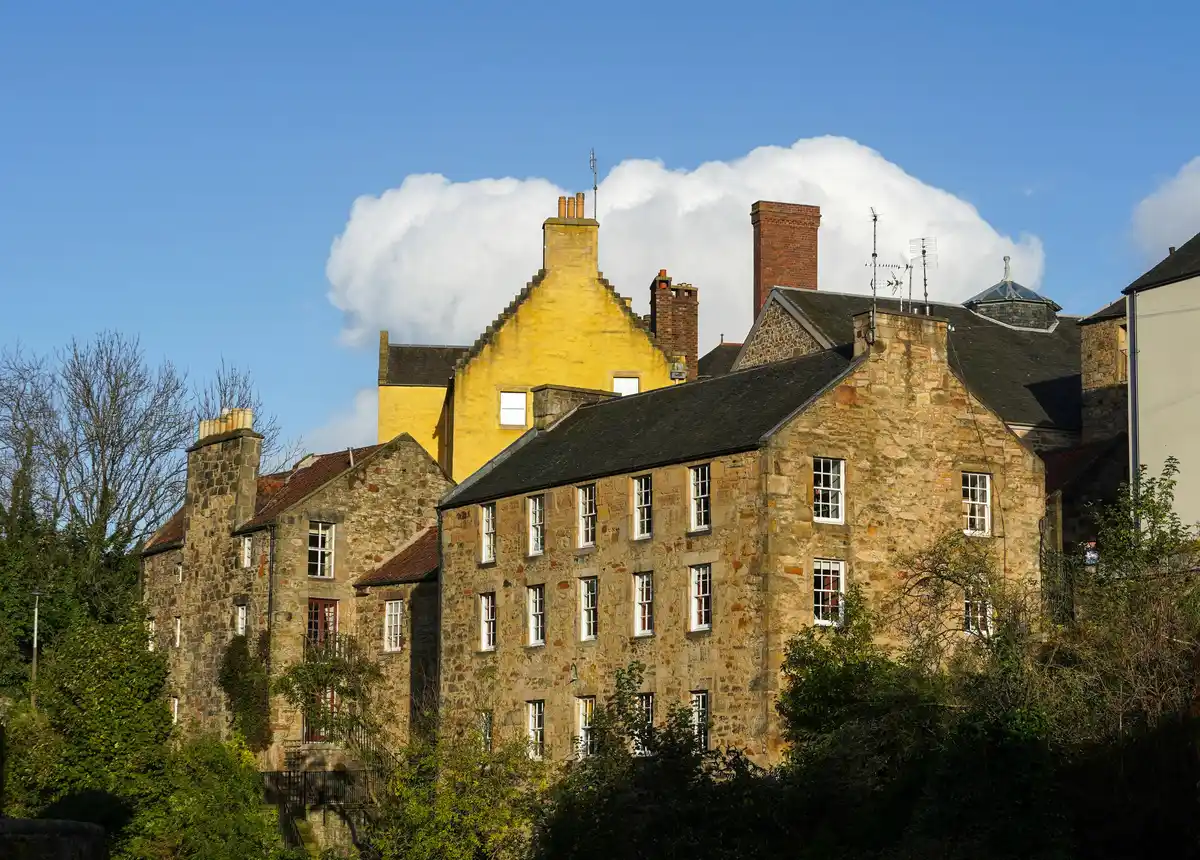
Stone walls, shared staircases, rooms where every centimetre carried consequence. Edinburgh’s tenement buildings did not just reshape the skyline when they rose through the 18th and 19th centuries. They reorganised how people lived, slept, and thought about space. Every piece of furniture had to justify its presence. Waste was not an option most families could afford.
The bedroom bore the brunt of this pressure. Box beds, built into alcoves and recesses, became a hallmark of Scottish tenement life. The principle they established, that a bed should fit the room’s architecture rather than dominate it, never entirely left.

The Vertical City Problem That Changed Scottish Bedrooms
Edinburgh’s medieval Old Town had nowhere to go but up. Defensive walls and difficult topography blocked outward expansion. From the 16th century, building went vertical. By the 1700s, some Old Town structures rose ten or more storeys above the closes below.
Interior space compressed at every floor. Bedrooms in working-class homes were often the smallest room in the flat. Decorative furniture was irrelevant. Each item earned its place or did not enter the room.
Residents and craftsmen found multi-functional solutions out of necessity rather than design philosophy. One room served as sleeping quarters, storage, and daytime sitting area. Not by choice. By arithmetic. That spatial logic persists in how many Edinburgh flats are arranged today. Some modern furniture choices still answer the same proportions, even if the history is not always named.
The preference for compact, purposeful bedroom arrangements visible in period Edinburgh properties today has its roots in these original constraints. Much of the housing stock that established those proportions still holds the same spatial limits today.
Box Beds and the Scottish Solution to Cold Stone Walls
Sandstone retained cold. North-facing tenement flats stayed damp through most of the year. Heating was unreliable at best, absent at worst. The box bed answered those conditions directly: a timber frame built into the room’s alcove, with sliding panels or heavy curtains at the front to trap warm air overnight.
Its construction insulated against stone walls and draughts simultaneously. In crowded homes where several family members shared limited sleeping quarters, the enclosed structure also provided a degree of privacy that open arrangements could not. Two adults. Compact dimensions. Materials used economically. The box bed’s size was not a stylistic choice. It reflected the alcove proportions the tenement had already determined.
Museum collections and historical surveys of Scottish domestic interiors show many of these beds were compact, designed to fit within the alcove space the building offered rather than imposing dimensions on the room. The furniture worked around the architecture. That inversion of the usual relationship between room and bed is what gave Scottish tenement bedrooms their particular character.
Platform beds, storage frames, and ottoman bases follow the same underlying logic. A bed should occupy minimal floor space while providing a contained sleeping environment. The box bed disappeared after central heating arrived. The spatial principle it embodied did not.
Shared Landings and the Birth of Bedroom Privacy Standards
Sound moved easily through tenement buildings. Multiple households shared each floor, connected by communal stone staircases. Walls between properties provided minimal acoustic separation. Proximity created real social pressure around how bedrooms were used at night.
Furniture moved away from shared walls. Beds and wardrobes absorbed sound rather than reflecting it toward neighbours. Interior doors closed at night. Movement after certain hours stopped. The bedroom became a contained, quiet zone not because anyone decided it should be, but because living closely with others made that the only workable arrangement.
Bed Store brings the decision back to how the bed sits inside the room: frame depth, mattress feel, wall position and whether the space still feels calm once the furniture is in place. A bed shop near me search becomes more useful when alcoves, wall position and floor clearance are part of the decision.
Those habits hardened into conventions. By the late 19th century, building regulations began formalising what residents had already established through daily practice. Light requirements, ventilation minimums, room size thresholds. Rules that codified what tenement living had already produced organically. Architects designing compact urban flats in Edinburgh still work with similar questions: light, ventilation, privacy, room size and furniture placement.
How Tenement Proportions Shaped Modern Scottish Bedroom Furniture
Many tenement bedrooms sit close to the compact proportions residents still recognise today. Those dimensions still shape furniture choices, not always by deliberate historical reference, but because much of the housing stock has kept the same basic limits for more than a century.
Many tenement staircases were narrow, with tight turns at each landing. Furniture had to be carried up in sections and assembled inside the flat. Anything that could not be disassembled for the staircase could not enter the home. That constraint shaped what Scottish makers produced and what retailers stocked, long before flat-pack designs became mainstream. The demand for modular bedroom furniture in Edinburgh had an architectural logic before it became a commercial one.
Slimmer wardrobe depths, smaller double bed frames, modular construction. These are structural necessities in Edinburgh’s period properties rather than stylistic preferences. Anyone searching mattress stores near me for a Marchmont or Bruntsfield flat is working within constraints their predecessors faced when the sandstone was freshly laid. The materials available have changed. The room dimensions have not.
The modular principle that tenement staircases imposed on Scottish furniture design anticipated some of the thinking later seen in flat-pack manufacturing. Edinburgh’s narrow closes and tight landings created a local demand for disassemblable furniture that the rest of the world eventually arrived at through logistics and cost rather than architectural necessity.
The Continuity of Constraint
Edinburgh’s tenements produced something beyond a set of building types. They embedded a spatial logic into how residents approached furniture, privacy, and rest. Box bed to divan. Divan to platform frame. Platform frame to ottoman storage bed. Each iteration answered the same fundamental problem that sandstone walls and narrow staircases had originally set.
Residents searching bed stores near me for a period Edinburgh flat are still responding to an architectural problem that began centuries ago. The question of how to sleep well in a compact stone building has not changed. The answers available have improved considerably.
Edinburgh’s tenements changed more than the skyline. They taught residents to treat the bedroom as architecture first and furniture second. Box beds, narrow staircases and compact rooms all point to the same lesson: a good bed does not fight the room. It works with it.
Comments on this guide to Edinburgh tenements property, Old Town homes article are welcome.
Property Mortgages
How a mortgage adviser in Edinburgh can help
Know the basics for refinancing your Mortgage
Comments / photos for the How Edinburgh Tenements Shaped the Way We Sleep Today page welcome