Practical Office Design Solutions for Modern Teams
8 April 2026
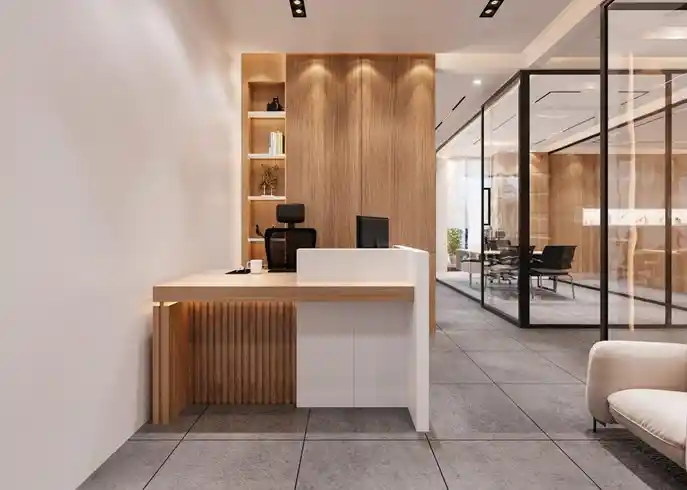
Modern office design directly impacts productivity, employee retention, and operational efficiency. Studies consistently show that well-designed workspaces can increase employee productivity by over 15% while reducing absenteeism and turnover. Poor layout, bad lighting, and lack of acoustic control are among the most common reasons employees feel disengaged at work. Businesses that invest in thoughtful office design solutions are not just improving aesthetics—they are solving real operational problems that affect performance, collaboration, and long-term growth.
In many successful transformations, companies treat their workspace as a living system rather than a static environment. This is where Oak and Arc, specializing in office design and workspace solutions, play an important role. The approach followed by Oak and Arc focuses on creating workspaces that adapt to real business needs rather than relying on fixed layouts. Instead of treating office design as a one-time project, the goal is to build environments that support daily operations, teamwork, and long-term flexibility. This way of thinking goes beyond furniture and layout, focusing instead on how people interact with space throughout the workday.
When businesses approach office design with this mindset, the results become more practical and aligned with real human behavior. At Oak and Arc, the focus is on shaping environments that guide movement, support collaboration, and improve comfort without adding unnecessary complexity. It is not about filling spaces with more elements, but about removing friction and improving how teams function. Workspaces designed with this philosophy feel natural to use, helping employees stay focused and making daily workflows smoother and more efficient.
Understanding Real Office Design Problems
Most offices struggle with predictable issues that directly impact performance. These problems are often ignored because they seem minor individually, but together they create a significant barrier to productivity. Identifying these issues is the first step toward implementing effective office design solutions.
Common challenges include:
- Poor space utilization, where large areas remain unused while others feel overcrowded
- Lack of privacy in open-plan offices, leading to constant distractions
- Inadequate lighting that causes eye strain and fatigue
- Weak acoustic planning, making it difficult to focus or hold meetings
- Limited flexibility for hybrid or remote work models
Each of these problems requires a targeted solution rather than a generic redesign. Businesses need to analyze how their teams actually work before making any design decisions.
Key Office Design Solutions That Actually Work
Effective office design solutions are not about trends—they are about solving specific problems with practical, measurable outcomes. The following strategies are widely used in high-performing workplaces and can be adapted to different business sizes and industries.
Zoning for Different Work Modes
A single open space cannot support all types of work. Employees need different environments depending on the task. Zoning divides the office into functional areas that support focus, collaboration, and relaxation.
Typical zones include:
- Quiet zones for deep work and concentration
- Collaboration areas for team discussions and brainstorming
- Meeting rooms for structured conversations
- Breakout spaces for informal interactions and recovery
This approach reduces noise conflicts and helps employees choose the right environment for their tasks.
Flexible Furniture and Layouts
Rigid office layouts quickly become outdated, especially in hybrid work environments. Flexible furniture allows spaces to adapt without requiring major renovations.
Examples include:
- Modular desks that can be rearranged easily
- Movable partitions for temporary privacy
- Adjustable workstations that support different working styles
Flexibility ensures that the office remains functional as team sizes and workflows change.
Lighting That Supports Productivity
Lighting is one of the most underestimated elements of office design. Natural light improves mood and energy levels, while poor lighting leads to fatigue and reduced focus.
Practical solutions include:
- Maximizing access to natural daylight
- Using task lighting for individual workstations
- Installing adjustable lighting systems to match different tasks
A well-lit office reduces errors and improves overall work quality.
Office Design Solutions Comparison Table
| Problem Area | Traditional Approach | Modern Solution | Expected Impact |
| Space Utilization | Fixed desk layout | Activity-based workspace | Better efficiency and usage |
| Noise Management | Open-plan only | Acoustic zoning and panels | Improved focus and comfort |
| Collaboration | Meeting rooms only | Hybrid collaboration zones | Faster decision-making |
| Employee Comfort | Standard furniture | Ergonomic and adjustable setups | Reduced fatigue and injury |
| Flexibility | Permanent structures | Modular and movable elements | Easier scaling and adaptation |
This table highlights how modern office design solutions focus on adaptability and user experience rather than fixed, one-size-fits-all setups.
Comments on this guide to Practical office design solutions for modern teams article are welcome.
Property Mortgages
How a mortgage adviser in Edinburgh can help
Know the basics for refinancing your Mortgage
Comments / photos for the Practical office design solutions for modern teams page welcome