What Edinburgh’s New Town Tells Us About Designing for Longevity
6 April 2026
Stand at the corner of Charlotte Square and look north along any street in Edinburgh’s New Town, and you’re seeing something remarkably rare: an urban masterplan that still works after more than two centuries. The proportions hold. The streetscape reads as coherent. The buildings have aged, certainly — but they haven’t dated.
James Craig’s 1767 plan wasn’t just a grid of streets. It was a deliberate set of decisions about scale, rhythm, and materiality that turned out to be extraordinarily durable. Architects and developers working today can learn a surprising amount from what the New Town got right — and from the handful of things it didn’t anticipate.
Proportion as a Structural Principle
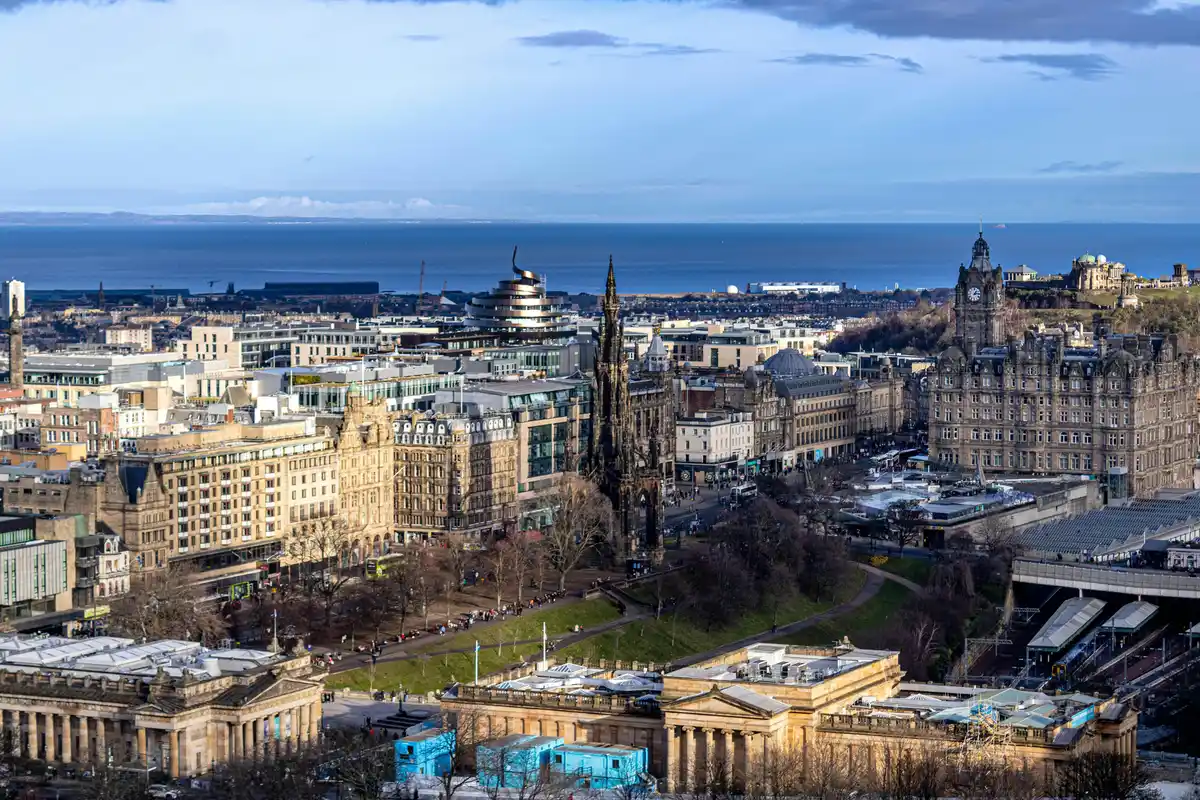
The New Town’s staying power has less to do with ornament than with mathematics. Façade heights relate to street widths at ratios that feel instinctively comfortable. Window openings follow a vertical hierarchy — tallest at piano nobile level, progressively shorter as the eye moves upward — that gives each elevation a sense of visual logic without demanding attention.
This proportional discipline meant that individual buildings, designed by different architects across different decades, still read as part of the same composition. Robert Adam’s north side of Charlotte Square (1791) and the later Moray Place crescent (1822) share a visual grammar even though their detailing diverges considerably. The proportions unify what the decoration cannot.
Modern housing developments rarely commit to this kind of proportional framework. Plot-by-plot design tends to produce streetscapes that feel fragmented within a generation. The New Town suggests that investing in shared dimensional rules at masterplan stage pays dividends far longer than investing in individual façade treatments.
Material Honesty and the Logic of Maintenance
Craigleith sandstone, Scottish slate, timber joinery, cast iron railings. The New Town’s original palette was narrow by modern standards, but every material was chosen for a specific performance reason as much as for appearance. Sandstone weathers predictably. Slate sheds water without concealed drainage. Timber absorbs movement in ways that rigid materials cannot.
Crucially, each of these materials can be repaired rather than replaced. A damaged ashlar block can be cut out and a new stone inserted. A corroded railing section can be re-forged. A deteriorated window sash can be spliced, re-glazed, or rebuilt to match the original profile without disturbing the surrounding masonry. This repairability is not incidental — it is what has allowed the New Town to survive two centuries of Scottish weather, coal smoke, traffic vibration, and shifting ground conditions.
Compare this with composite or synthetic materials now common in residential construction. Many perform well initially but cannot be locally repaired. A failed uPVC window unit, for example, typically requires complete frame replacement — a far more disruptive and costly intervention than repairing a single timber sash component.
Windows as the Façade’s Critical Element
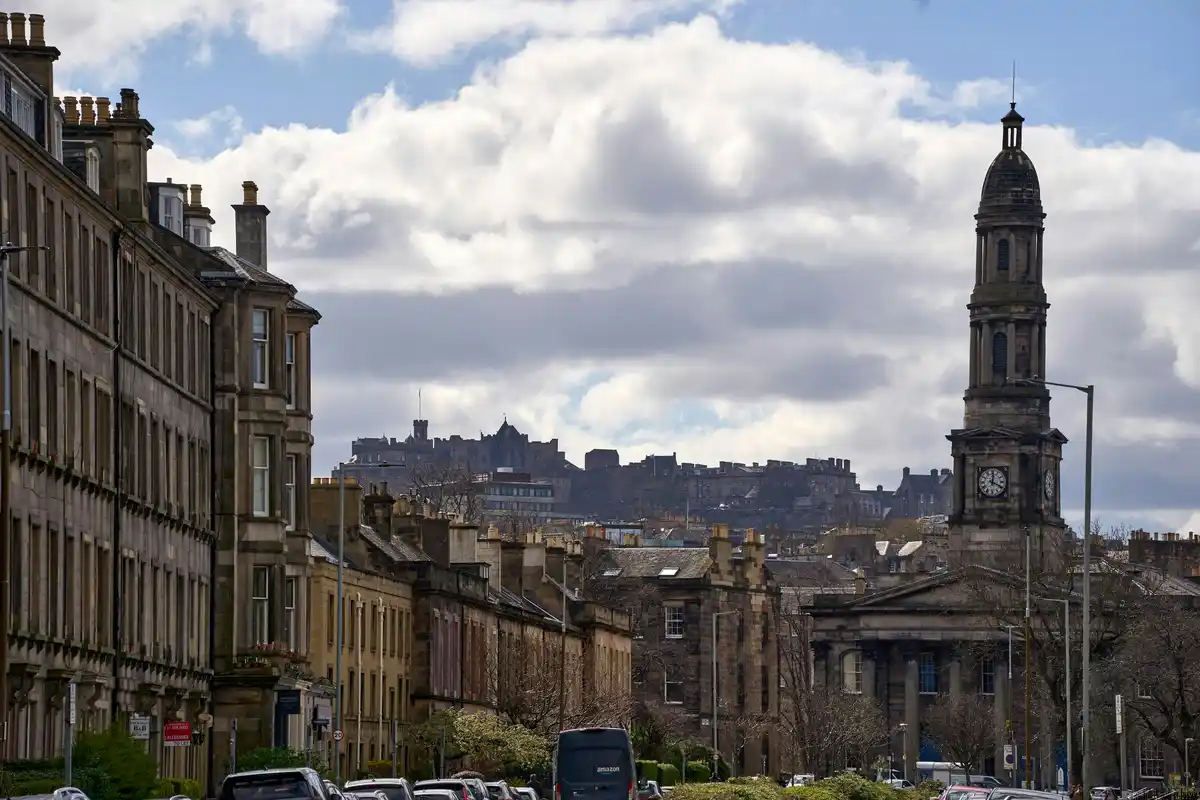
If there is one element that defines the New Town’s character more than any other, it is the window. Glazing accounts for a significant proportion of each elevation. The rhythm of sash openings — their width, height, glazing bar pattern, and depth of reveal — establishes the visual tempo of entire streets. Change the windows and the building reads differently, even if every other element remains untouched.
This is why conservation officers in Edinburgh are particularly attentive to fenestration proposals. Profile thickness, bar proportions, glass reflectivity, and even the shadow line created by the sash meeting rail all contribute to the overall reading of a listed façade. Replacement windows that approximate the original but miss these subtleties can diminish a terrace’s coherence in ways that are difficult to reverse.
Modern engineered timber has made faithful replication significantly easier. Softwood and hardwood frames can now be manufactured to match historical profiles precisely while incorporating concealed draught-proofing, improved glazing, and enhanced weather resistance. Suppliers such as woodenwindows-online.co.uk offer bespoke timber windows in engineered pine, meranti, and oak — species that align with both heritage specification requirements and contemporary thermal performance standards.
The result is a window that satisfies planning constraints, improves energy performance, and — perhaps most importantly — maintains the proportional discipline that makes the New Town elevation work as a whole.
What Longevity Actually Requires
The New Town was not designed to last forever. It was designed to be maintained. That distinction matters. Every material in the original specification assumed a cycle of inspection, repair, and periodic renewal. The stonework needs repointing. The slates need replacing. The ironwork needs painting. The timber needs attention.
Buildings that endure are not the ones that resist all deterioration indefinitely. They are the ones whose components can be individually serviced without cascading into larger interventions. The New Town’s success is, in large part, a story about maintainability — about choosing materials and details that allow each generation to do its share of the work without starting from scratch.
For architects designing today, the lesson is worth taking seriously. Specification decisions that prioritise initial cost over long-term repairability may produce buildings that look acceptable at handover but become progressively more expensive — and more compromised — with each passing decade. The New Town didn’t avoid deterioration. It planned for it.
A Masterplan That Still Teaches
Two hundred and fifty years after Craig’s plan was accepted, the New Town remains one of the most complete examples of urban design longevity in Europe. Its survival rests not on monumental engineering but on proportional discipline, material honesty, and a quiet insistence on repairability. These are not nostalgic principles. They are practical ones — and they are available to every project that chooses to take the long view.
Comments on this guide to What Edinburgh’s New Town Tells Us About Designing for Longevity article are welcome.
Edinburgh Architecture Designs
26-31 Charlotte Square Edinburgh New Town
+++
Scottish Capital City Buildings
Edinburgh Architecture Designs – Lothians architectural selection below:

Comments / photos for the Edinburgh New Town designing for longevity page welcome