Heat Pumps in Edinburgh’s Period Properties: Heritage, Sandstone and Getting It Right
4 June 2026
Edinburgh’s housing is dominated by buildings that were never designed with a heat pump in mind. Georgian terraces in the New Town, Marchmont and Bruntsfield tenements, sandstone villas in the Grange and Morningside: much of it is listed, in a conservation area, or both. So the assumption that a heat pump simply will not work in these properties is understandable. It is also, in most cases, wrong.
The barrier is rarely the building’s age. It is the quality of the design. A period property heated badly by a heat pump usually points to a system that was specified without enough attention to heat loss, emitters and the constraints of the building, not to a technology that cannot cope with old stone.
The “it won’t work in an old building” myth
The belief that heat pumps and traditional properties are incompatible has a real source. A heat pump delivers heat at a lower flow temperature than a gas boiler, so a system sized and installed as if it were a like-for-like boiler swap will struggle, and the homeowner concludes the building is the problem.
Designed correctly, the picture changes. A heat pump works well in an older property when the system is built around low-temperature operation from the start, with emitters sized to deliver enough heat at that lower temperature and the fabric understood before anything is specified. Plenty of Edinburgh’s solid-stone homes run comfortably on a well-designed heat pump. The detailed thinking behind getting this right in traditional Scottish stock is set out in this guide to heat pumps in older and period properties, and it is worth reading before writing a building off.
Conservation and listed-building constraints
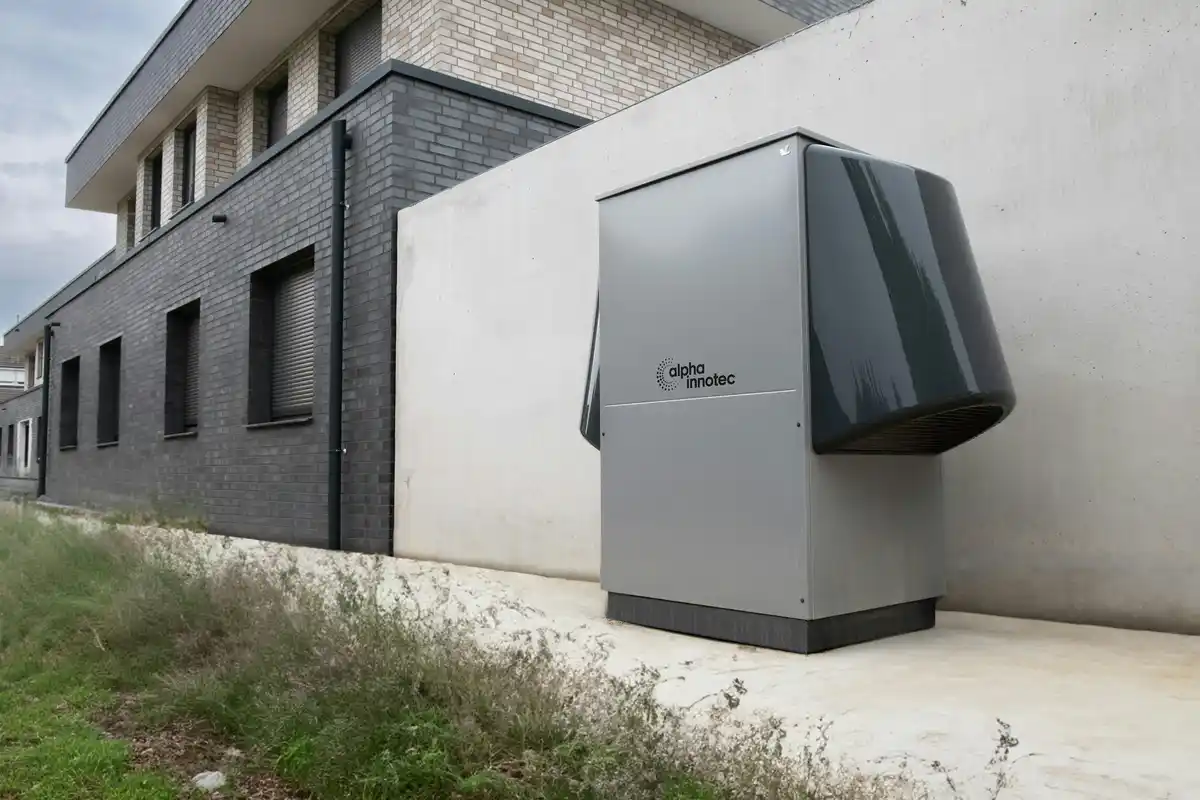
This is where Edinburgh asks more of the design than most cities. The external unit has to go somewhere, and on a New Town terrace or a tenement that is not a trivial question. Visual impact matters, consent is often required, and a front elevation in a conservation area is rarely the place for a visible unit.
The work-around is usually careful siting rather than abandonment. Rear elevations, courtyards, lightwells and discreet ground-level positions can take a unit without harming the building’s character or its setting. For tenement flats there is the added layer of shared ownership and communal space, which means the siting conversation involves neighbours and sometimes a factor. None of this is a reason not to proceed. It is a reason to resolve the location and any consent early, as part of the design, rather than discovering a constraint once the rest of the scheme is fixed.
Sandstone, solid walls and heat loss
Edinburgh’s traditional walls are solid masonry, not cavity construction, and they lose heat differently. That makes an accurate heat loss survey the single most important step in the whole process. Sizing a heat pump from a rule of thumb, or from the old boiler’s output, is how systems end up wrong. Sizing it from a room-by-room heat loss calculation is how they end up right.
Fabric and heating should also be sequenced sensibly. Sympathetic improvements to insulation and draughts, where the building and any listing allow, reduce the heat the property needs and therefore the size of the system it requires. In a listed Georgian or Victorian property the options are more constrained than in a modern house, and internal measures have to respect cornicing, shutters and original features, but even modest, appropriate work changes the numbers. The point is to treat the building’s thermal performance and the heating system as one design question, not two separate jobs.
Microbore, radiators and emitter sizing
Many older Edinburgh properties, particularly those converted or reworked in the later twentieth century, contain microbore pipework, the narrow-diameter pipe that can restrict the flow rates a heat pump prefers. It is a common find and a manageable one, but it has to be identified at survey, because it influences both the design and the cost.
Emitters are the other half of the equation. A heat pump running at a lower flow temperature needs radiators sized to put out enough heat at that temperature, which often means some radiators are upgraded rather than every one replaced. Underfloor heating, where a floor is already being lifted as part of a wider renovation, is an efficient match for a heat pump and worth considering at that point, though it is rarely necessary to retrofit it throughout an occupied period home. The design choice is about matching the emitters to the flow temperature, not defaulting to the most disruptive option.
Designing the system for a period property
Pulling it together, a heat pump in an Edinburgh period property is a design exercise that runs alongside the rest of the building work. The external unit needs a location that satisfies both performance and consent. The hot water cylinder and any buffer need space, which in a tenement flat or a tightly planned terrace is a real constraint to plan for, not assume away. Pipe runs have to be routed through a building that was not laid out for them, ideally without damaging the features that make it worth preserving.
Done as part of the design, these are solvable problems, and the result is a traditional Edinburgh home that heats cleanly and runs at a sensible cost. Done as an afterthought, the same property produces the disappointing outcomes that feed the myth. The deciding factor is design quality, not the age of the stone.
Edinburgh’s period properties can run heat pumps well. The constraint that matters is not the building, it is whether the system was designed for the building, and that is squarely within the control of the people specifying the work.
Comments on this guide to Heat Pumps in Edinburgh’s Period Properties: Heritage, Sandstone and Getting It Right article are welcome.
Architecture
Comments / photos for the Edinburgh period property heat pumps advice page welcome.