Shower Designs Can Make Small Bathrooms Feel Twice the Size: Here’s How
12 March 2026
Small bathrooms demand careful design decisions because limited floor space amplifies the impact of every fixture choice. A shower enclosure often becomes the feature that determines whether the room feels organised and open, or crowded and fragmented.
Perception of space in compact bathrooms rarely depends solely on square footage. Instead, it is shaped by visual continuity, fixture scale, and how clearly each element occupies its zone within the layout. When those relationships are considered early in the design process, even a modest bathroom can feel balanced and functional.
A poorly sized enclosure interrupts the room and blocks sightlines. A well-planned one integrates with the space and allows the eye to move freely across it.
That difference explains why the shower area should be planned before finishing materials or accessories are chosen.
Why the Shower Enclosure Shapes the Entire Bathroom Layout
The shower enclosure defines more than the wet zone. Its footprint influences how much usable floor area remains and how easily people move around the room.
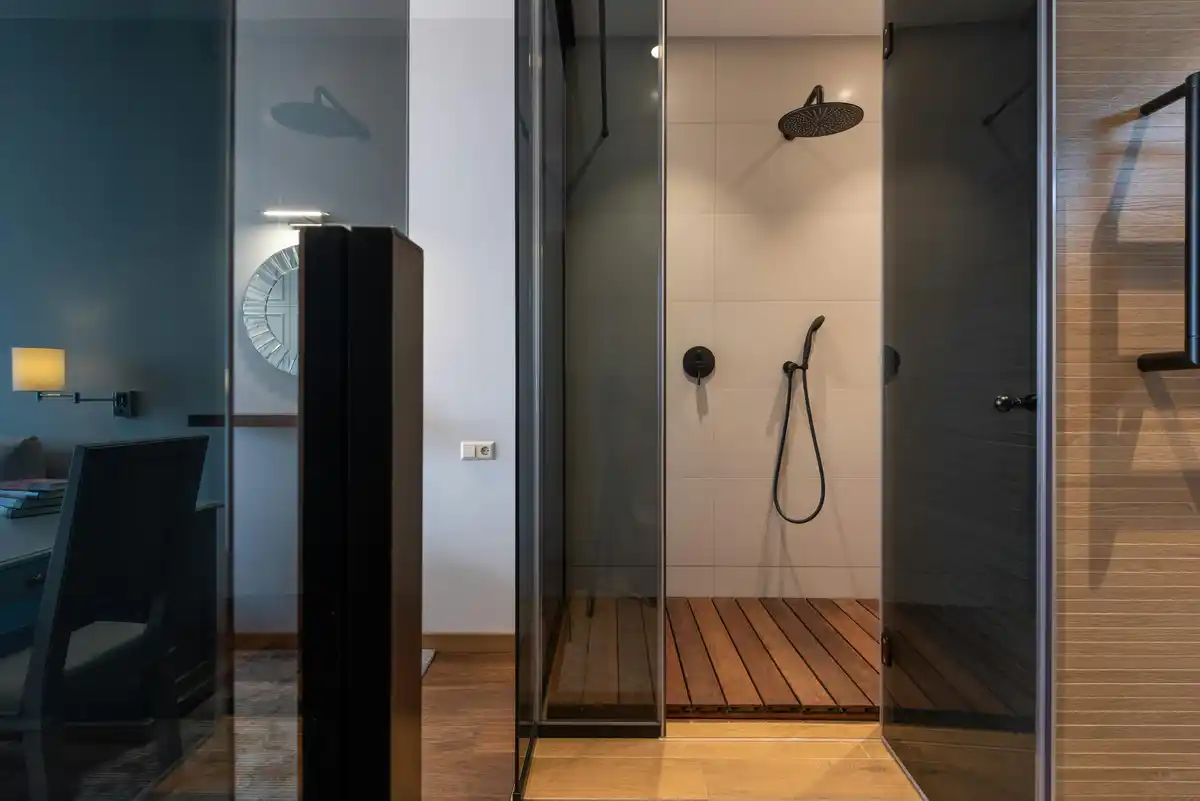
When the enclosure is oversized or heavily framed, it visually divides the bathroom. Frames, hinges and thick profiles interrupt the view across the room, making the space feel segmented. In small bathrooms, that visual interruption becomes noticeable immediately.
A stylish shower enclosure, like those from Heat and Plumb, avoids that problem by maintaining visual continuity across the space. Clear glass allows light to pass through the enclosure, while minimal framing prevents the shower from becoming a dominant visual block within the room.
The physical size of the bathroom does not change. The perception of the space does.
When sightlines remain open and the enclosure integrates with surrounding tiles and walls, the room feels calmer and more spacious. This is why many designers now favour modern shower enclosures with reduced framing in smaller layouts. The structure becomes quieter, allowing the room itself to take visual priority.
The Design Principle: Visual Continuity
Visual continuity refers to the ability of the eye to move across a room without interruption. When surfaces remain visible from wall to wall, the space feels larger because fewer boundaries break the visual field.
A shower enclosure directly affects this principle.
Framed enclosures introduce metal borders around each glass panel. Those lines divide the room visually and create separate sections within the layout. The result is a bathroom that feels more compact than its actual dimensions.
Frameless or semi-frameless modern shower enclosures reduce this effect. With fewer visible structural elements, the glass panels appear lighter and allow surrounding surfaces to remain visible.
The appearance feels minimal. The installation, however, requires precision.
Frameless systems rely on thicker glass panels for strength. Walls must be straight, and the floor level must be accurate, so the glass seals correctly. When these conditions are met, the enclosure appears integrated rather than added.
The Practical Relationship Between a Shower Enclosure and Tray
Every design decision must eventually translate into installation. The relationship between a shower enclosure and tray determines how easily it can be fitted and how effectively water is contained.
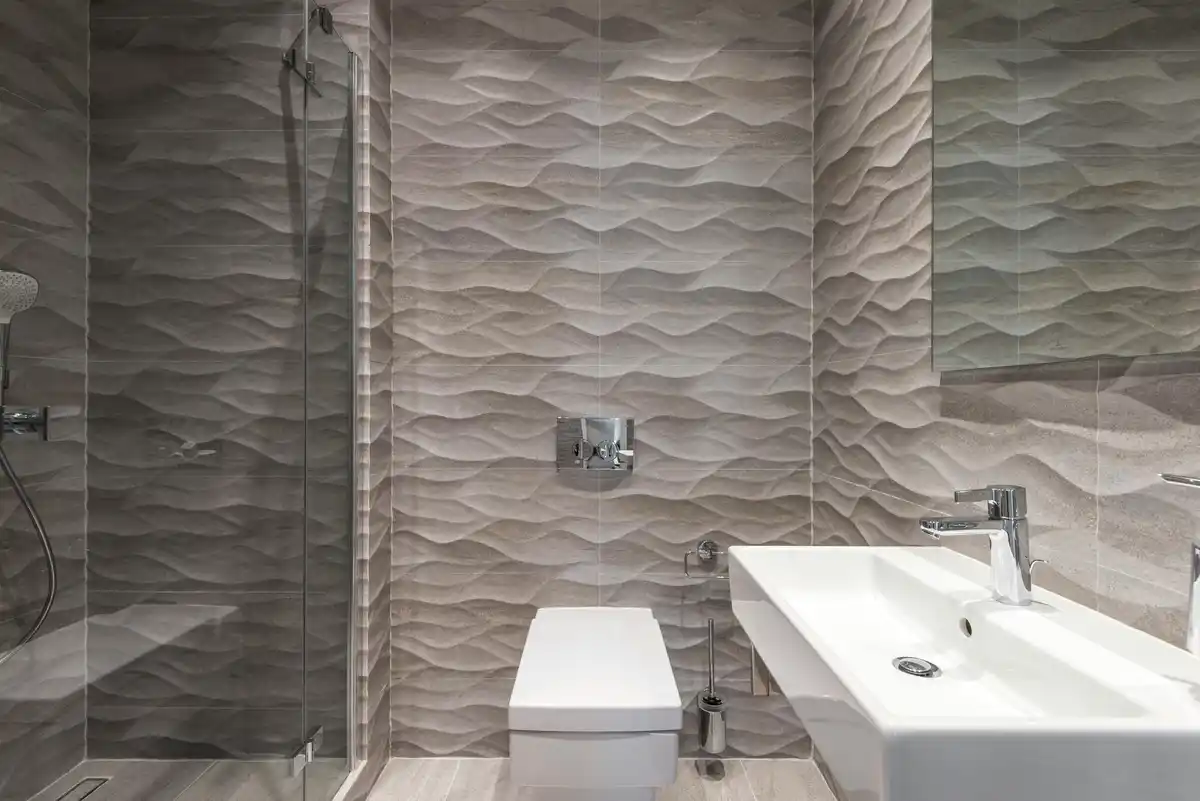
A tray forms a defined base for the enclosure. Water flows towards the drain within that boundary, while the enclosure frame or glass panels sit securely on the tray surface. This arrangement simplifies installation because the tray compensates for small variations in floor level.
Level-access showers offer a seamless appearance, though they require more preparation beneath the floor. Waterproofing layers must be installed carefully, and the drainage system must be positioned precisely.
For many renovation projects, a shower enclosure and tray combination provides the most reliable balance between practicality and design. The tray controls water flow while the enclosure defines the area without disrupting the room’s layout.
This approach keeps installation straightforward while still supporting the visual openness that smaller bathrooms benefit from.
Door Types and Their Effect on Usable Space
Door movement changes how the bathroom functions each day.
Pivot doors swing outward on hinges. This design creates a wide entry into the shower, which can feel comfortable during use. The door, however, requires clear floor space in front of the enclosure in order to open fully.
In smaller bathrooms, that clearance may conflict with nearby fixtures.
Sliding doors solve that problem because the glass panels move sideways along the enclosure frame. The door remains within the footprint of the enclosure, leaving circulation space around the rest of the bathroom unaffected.
The difference is practical rather than stylistic. Pivot doors prioritise entry width. Sliding doors protect circulation space.
The most suitable choice depends entirely on the room’s layout.
Choosing an Enclosure Shape That Supports the Layout
The footprint of a shower enclosure describes the floor area it occupies once installed. Choosing the correct shape ensures the shower integrates naturally within the room rather than competing with other fixtures.
Several configurations work particularly well in compact bathrooms, for example:
- Quadrant enclosures sit neatly into corners and use curved glass panels at the front. The curved edge softens the enclosure’s presence and leaves more open floor area in the centre of the room.
- Square enclosures align closely with wall lines and tiled surfaces. Their straight edges make planning around nearby basins or storage units more predictable.
- Rectangular enclosures work in slightly larger compact bathrooms where additional showering space is needed without increasing the overall width of the installation.
Each configuration solves a different spatial constraint. The most suitable option depends on the plumbing location and the room’s proportions.
Designing Small Bathrooms With Clarity
Small bathrooms benefit from clarity rather than complexity. Each fixture should support the layout and contribute to the overall balance of the space.
The shower enclosure plays a central role in that structure. Its scale, glass type and door movement influence how the bathroom feels once installation is complete.
When the enclosure maintains visual continuity, respects circulation space and integrates with the room’s proportions, the bathroom becomes easier to use.
The dimensions remain the same. The experience of the space improves significantly.
Thoughtful design decisions create that difference.
Comments on this guide to Clever Shower Designs Can Make Small Bathrooms Feel Twice the Size: Here’s How article are welcome.
Home Bathroom
Recently added house bathroom Articles – architectural selection below:
How to transform your bathroom
Best plants to keep in your bathroom
High-quality ceiling panels for your bathroom
++
Edinburgh Architecture
Comments / photos for the Clever Shower Designs Can Make Small Bathrooms Feel Twice the Size: Here’s How page welcome.