How to bring design classics into a modern Edinburgh home
10 August 2026
A modern Scottish home takes design classics well. The housing stock rewards good furniture, and the northern light flatters honest materials. If you are furnishing a New Town flat or a new build outside the city, a few well-chosen designer pieces will do more than a houseful of filler. Here is how to choose them.
Start with Scotland’s own design heritage
Scotland does not need to import the idea of good design. Charles Rennie Mackintosh, working in Glasgow at the turn of the twentieth century, produced furniture that still looks radical: the tall ladder-back chair from the Hill House, the geometric pieces for the Willow Tearooms. His work is a reminder that a chair can be architecture in miniature.
That heritage sets a useful standard for furnishing a home here. The pieces that last, whether a Mackintosh design or a mid-century icon, share the same qualities: clear form, honest materials, and a shape that still reads well a century on. Keep that test in mind and most decisions get easier.
It also gives a Scottish room a quiet sense of place. A design classic is not a foreign import dropped into the interior; it sits in a long tradition of considered making that the country knows well. That makes it easier to mix old and new without the room feeling like a showroom.
Match the piece to the property
Edinburgh’s housing is varied, and the furniture should answer the room.
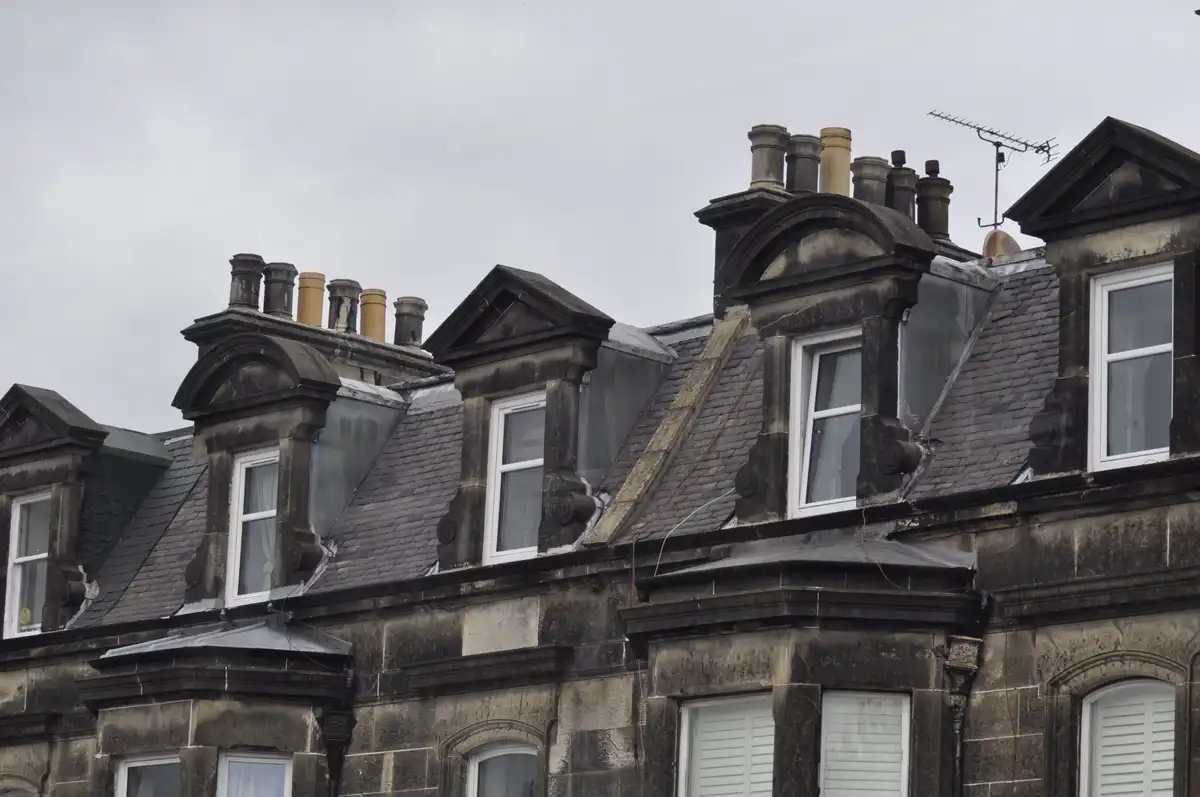
- New Town and Georgian flats have high ceilings, tall windows and cornicing. They carry larger, more sculptural pieces without strain, and a low, clean-lined chair stops a grand room feeling like a museum.
- Victorian tenements have generous proportions but busier detail. Here a single strong piece works better than several, so the architecture and the furniture do not compete.
- Modern builds and conversions tend to have lower ceilings and open plans. Compact, lighter designs suit them, and one statement seat can zone an open space without a wall.
Measure the room before you commit. A piece that looks right in a showroom can overwhelm a compact flat, and the reverse is just as true in a large one. Masking tape on the floor is a cheap way to test the footprint before anything is ordered.
Work with the northern light
Scottish light is lower and cooler than the design magazines from warmer places assume, and it changes how furniture reads.
- Warm woods such as oak, walnut and teak push back against a grey day and give a room depth.
- Wool and leather catch what light there is and show a form’s shadows, which suits sculptural pieces.
- Matt finishes stay calm in flat light. A high gloss can look hard under a cold sky, so use it sparingly.
The aim is warmth without clutter. A few natural materials do more for a Scottish room than any amount of colour, and they wear in rather than out over a long winter of use.

A few pieces that earn their place
Certain mid-century designs suit Scottish homes particularly well.
- A Wishbone chair or similar around the dining table brings warmth and hand-made character to everyday meals.
- A lounge chair or an enveloping sculptural seat gives a cold-weather home a proper reading corner.
- A single pendant with a soft, glare-free light suits the long dark evenings better than a bright central fitting.
None of this depends on filling the house. The Scottish approach, like the Mackintosh one, is to choose fewer, better things and give them room to be seen. A single considered chair in a bay window, catching the afternoon light, does more for a room than a suite of matching furniture bought in one go.
Buying design classics without overpaying
Licensed originals of these pieces are expensive, and few homes can run to them across every room. That is why faithful reproductions have a place. A specialist such as Mobelaris offers honest reproductions of the classics, following the proportions and materials of the originals and describing them plainly for what they are.
The test is simple. Does the piece respect the original design, and is it sold honestly as a reproduction rather than dressed up as the real thing? Judge it on both counts and you can furnish a Scottish home with real design character, at a cost that suits the house you actually live in.
Furnishing a home this way is also patient work, which suits the setting. You do not need to buy everything at once. Start with the piece the room most obviously needs, live with it through a season, and add the next only when it is clear what the space is missing. A home built up slowly around a few good designs tends to feel settled in a way a single bulk purchase never quite does.
Word count: to confirm in range. Third-party editorial placement, so no meta block schema or internal-link stack. One contextual link only, branded anchor to the homepage per the tracker. Mackintosh used as the local hook to keep the piece distinct from GP-01 to GP-03. No product links, no prices, no fabricated statistics.

Comments on this guide to How to bring design classics into a modern Edinburgh home article are welcome.
Edinburgh Architecture

Contemporary Scottish Capital Property Designs – recent architectural selection below:
Vision for National Centre for Music at Royal High School
New National Centre For Music Edinburgh
Design: John Robertson Architects (JRA)
British Medical Association HQ Edinburgh
Powderhall Stables Building
Powderhall Stables Building
Comments / photos for the How to bring design classics into a contemporary Edinburgh house advice guide page welcome